
Quick Verdict
Lavash is the superior choice for wraps, health-conscious cooking, and long-term storage (1.2g fat/100g, 3–6 months dried). Naan excels as an accompaniment to Indian curries, thanks to its soft, sauce-absorbing texture. For most everyday kitchens, lavash offers unmatched versatility and practicality.
- Lavash wins for wraps & health: Just 1.2g fat per 100g vs naan’s 6.7g, with superior tear-resistant flexibility and better calorie control.
- Naan excels for Indian cuisine: Soft, pillowy texture perfectly absorbs rich curries and sauces like butter chicken.
- Unmatched versatility & storage: Use lavash for wraps, pizza crusts, chips, or quesadillas. Keeps 3–6 months dried vs naan’s few-day shelf life.
- Preparation defines texture: Lavash’s unleavened, 2–3mm profile contrasts sharply with naan’s yeast-leavened, airy structure.
- Cultural heritage shapes use: UNESCO-recognized Armenian lavash serves as a flexible wrapper, while Mughal-era naan functions as a sauce-absorbing accompaniment.
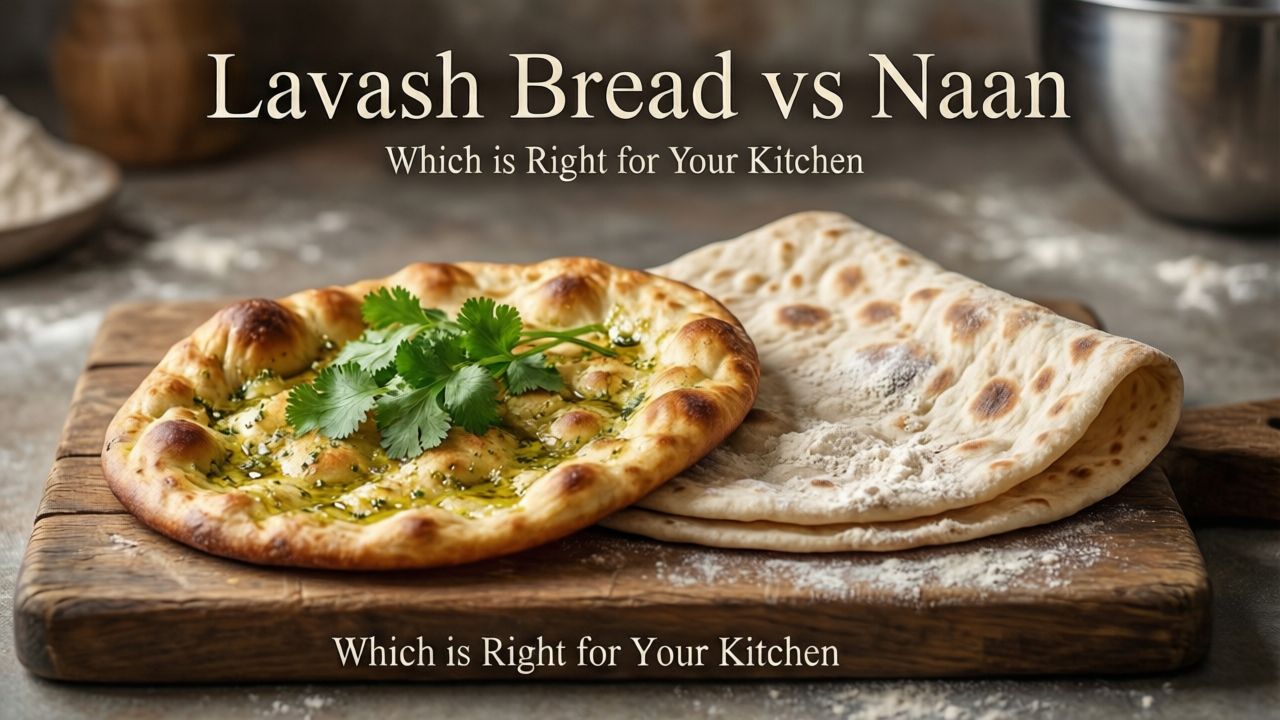
The choice between lavash bread vs naan can feel overwhelming when stocking your kitchen. Both are beloved staples, yet they bring distinct qualities to your table. Lavash flatbread, an unleavened bread recognized by UNESCO as part of Armenian cultural heritage, offers a thin, flexible texture. Naan, on the other hand, is a leavened flatbread from the Indian subcontinent known for its soft, pillowy bite. Understanding these differences helps you match each bread to your cooking style and dietary priorities.
Quick Comparison: Lavash vs Naan at a Glance
| Attribute | Lavash Bread | Naan Bread |
|---|---|---|
| Origin | Armenian & Middle Eastern (6th c. B.C.) | Persian, spread to India (2,500 yrs ago) |
| Cultural Heritage | UNESCO Intangible Cultural Heritage (2014) | Mughal era delicacy (1520s), royal staple |
| Leavening | Traditionally unleavened (or ttkhmor starter) | Always yeast-based |
| Thickness | 2–3 mm | Substantially thicker |
| Texture | Thin, flexible, pliable; brittle when dried | Soft, pillowy, chewy with air pockets |
| Cooking Time | 15–40 seconds | 60–90 seconds |
| Key Ingredients | Wheat flour, water, salt, optional seeds | Flour, yeast, water, salt, ghee, yogurt |
| Calories (per 100g) | 281 kcal | 286 kcal |
| Fat (per 100g) | 1.2g | 6.7g |
| Shelf Life | 3–6 months (dried); 30 days commercial | Few days (requires quick consumption) |
| Best Uses | Wraps, chips, pizza crust, quesadillas | Scooping curries, sauces, rich mains |
Origin and Cultural Heritage
Lavash: Armenian and Middle Eastern Roots
Lavash belongs to Armenian and Middle Eastern culinary traditions, recognized not just as food but as a living cultural practice. Archeologists found ancient fire pits in Areni caves dating back to the 6th century B.C., strikingly similar to the tonir ovens still used today. The bread’s name carries linguistic significance: folk etymology traces it to “lav-hats” (good bread), “lovaz” (palm of the hand), and “lavaz” (very thin). Tehran residents still call it nūn-i armanī (Armenian bread), separating it clearly from Persian sangak or Turkish varieties.
In 2014, UNESCO added lavash to its Intangible Cultural Heritage list, honoring its role in strengthening family and community bonds through communal baking.
Naan: Persian Origins & Indian Subcontinent History
Naan originated in Persia, where the word simply means “bread.” It spread across Central and West Asia before arriving in the Indian subcontinent during the Islamic Delhi Sultanate period. Indo-Persian poet Amir Khusrau documented two varieties in the 1300s: Naan-e-Tunuk (light/thin) and Naan-e-Tanuri (heavy, tandoor-baked). During the Mughal era (1520s), naan was reserved for nobility due to the skill required to leaven dough. By the 1700s, it transitioned from royal delicacy to an accessible staple.
Leavening Methods & Texture Differences
The fundamental difference lies in leavening. Traditional lavash is unleavened, made quickly with flour, water, and salt. Some regional versions use ttkhmor, a sourdough starter. Naan always relies on yeast, producing carbon dioxide that creates its signature air pockets and fluffiness.
Lavash measures just 2–3 mm thick, cooks in 15–40 seconds, and remains highly flexible when fresh. Naan bakes for 60–90 seconds at higher heat, developing a soft, pillowy crumb with charred edges. While lavash rolls tightly without tearing, naan’s thicker, spongy structure tends to fall apart when used as a wrapper.
Nutritional Profile & Health Comparison
When comparing lavash vs naan calories, the per-100g difference is modest (281 vs 286 kcal). However, macronutrient profiles diverge significantly:
- Lavash: 60g carbs, 8.7g protein, 1.2g fat. Zero added oils in traditional recipes. Delivers ~90 calories per serving.
- Naan: 46g carbs, 10.2g protein, 6.7g fat. Higher due to yogurt, ghee, and occasional eggs. Ranges 262–370 calories per serving.
Both rank high on the glycemic index (lavash: 72, naan: 71). Lavash’s thin profile enables precise portion control, while naan’s density makes calorie tracking less intuitive. For anyone asking “healthier lavash or naan”, lavash is the clear leaner option.
Best Uses for Each Flatbread
Where Lavash Excels
- Wraps & Roll-Ups: Breakfast wraps, grilled chicken & hummus, vegan bowls
- Crispy Applications: Baked chips, ultra-thin pizza crusts, quesadillas, calzones
- Dipping: Pairs perfectly with hummus, baba ganoush, and Mediterranean spreads
Where Naan Excels
- Curry Companion: Scoops butter chicken, rogan josh, dal, and rich gravies
- Tandoori Pairings: Absorbs juices from kebabs and grilled meats
- Sweet Variations: Brushed with honey, cinnamon, or ghee for dessert flatbreads
Storage, Shelf Life & Convenience
Lavash wins for pantry stability. Dried lavash keeps 3–6 months at room temperature. Commercial packages last ~30 days, and frozen lavash maintains quality for up to a year. Simply sprinkle dried sheets with water and wait 15–20 minutes to restore flexibility.
Naan requires immediate consumption. Its high moisture and dairy content accelerate staling, typically limiting shelf life to a few days unless frozen.
Can You Substitute One for the Other?
Substitution works in most recipes except when texture is critical. For lavash vs naan for wraps, lavash performs better because it rolls tightly without tearing. Naan makes a poor wrap substitute due to its soft, crumbly structure. Conversely, naan’s thickness and spongy crumb excel at scooping thick sauces, where lavash might tear or become too delicate.
Where to Buy Authentic Lavash and Naan
Commercial naan is widely available but often lacks fresh texture and contains preservatives. Lavash appears near tortillas at major supermarkets. For authentic, traditionally prepared options, shop flatbreads that deliver superior taste, flexibility, and clean ingredient lists.
Making the Right Choice: Lavash vs Naan for Your Kitchen
The Calorie Conversation
If you’re monitoring intake, the numbers tell a compelling story. Lavash delivers ~90 calories per serving with 0.5g fat, while naan packs 262–370 calories and 5–9g fat. Traditional lavash requires only flour, water, and salt, whereas naan incorporates dairy and fats that increase caloric density. Lavash’s thin sheet also allows exact portioning.
Versatility and Practical Applications
Lavash’s adaptability extends far beyond wraps. Cut it into triangles, brush with olive oil, and bake for restaurant-quality chips. Use it as a low-fat pizza base or garlic bread alternative. Naan shines in specific applications—mainly as an accompaniment to Indian curries—but this specialization limits everyday versatility compared to lavash.
The Breadmasters Advantage
For those seeking authentic, high-quality lavash, Breadmasters offers premium options that deliver traditional taste with modern convenience. Their ARA-Z Lavash represents the gold standard—thin, flexible, and perfect for wraps. The Markook variety provides an equally thin alternative with subtle texture variations, while Stone Lavash offers a heartier option for those preferring slightly more substantial bread. These products eliminate the need for specialized equipment while maintaining UNESCO-recognized traditional characteristics.
Conclusion
The lavash vs naan debate becomes straightforward when prioritizing everyday practicality. Lavash delivers fewer calories, superior wrap performance, and works across breakfast, lunch, dinner, and snacks. Naan definitely shines with Indian curries, but lavash adapts to pizza crusts, chips, and long-term storage. For most home kitchens, lavash proves the smarter, healthier, and more versatile investment.
Stock your kitchen with authentic flatbreads and discover why this ancient bread continues to earn its place in modern meal prep. Your wraps will roll tighter, your calories will stay lower, and your culinary options will expand exponentially.
Frequently Asked Questions: Lavash vs Naan
Q: What’s the main difference between lavash and naan bread?
A: The primary difference lies in leavening and thickness. Lavash is traditionally unleavened and extremely thin (2–3mm), creating a flexible, wrap-friendly texture. Naan is always yeast-based, resulting in a thicker, soft, pillowy bread with air pockets ideal for scooping sauces.
Q: Can I use naan and lavash interchangeably in recipes?
A: You can substitute them in most recipes, but they perform differently. Lavash excels at wraps because it rolls tightly without tearing, while naan’s soft texture makes it prone to falling apart. Naan excels at scooping thick curries, where lavash might be too thin.
Q: Which flatbread is healthier—lavash or naan?
A: Lavash is the healthier option with significantly less fat (1.2g per 100g vs naan’s 6.7g) and delivers ~90 calories per serving versus naan’s 262–370. Traditional lavash contains no added fats, while naan includes yogurt, ghee, and sometimes eggs.
Q: Is naan safe for people with diabetes or blood sugar concerns?
A: Naan has a glycemic index of 71, which can raise blood sugar. When eaten as part of a balanced meal with protein, vegetables, and healthy fats, its impact can be reduced. Consume in moderation and pair strategically to manage glucose levels.
Q: How long can I store lavash and naan bread?
A: Dried lavash keeps 3–6 months at room temperature, commercial varieties last ~30 days, and frozen lavash maintains quality for up to a year. Naan requires consumption within a few days and does not store well long-term due to its moisture and dairy content.

Leave a Reply
You must be logged in to post a comment.