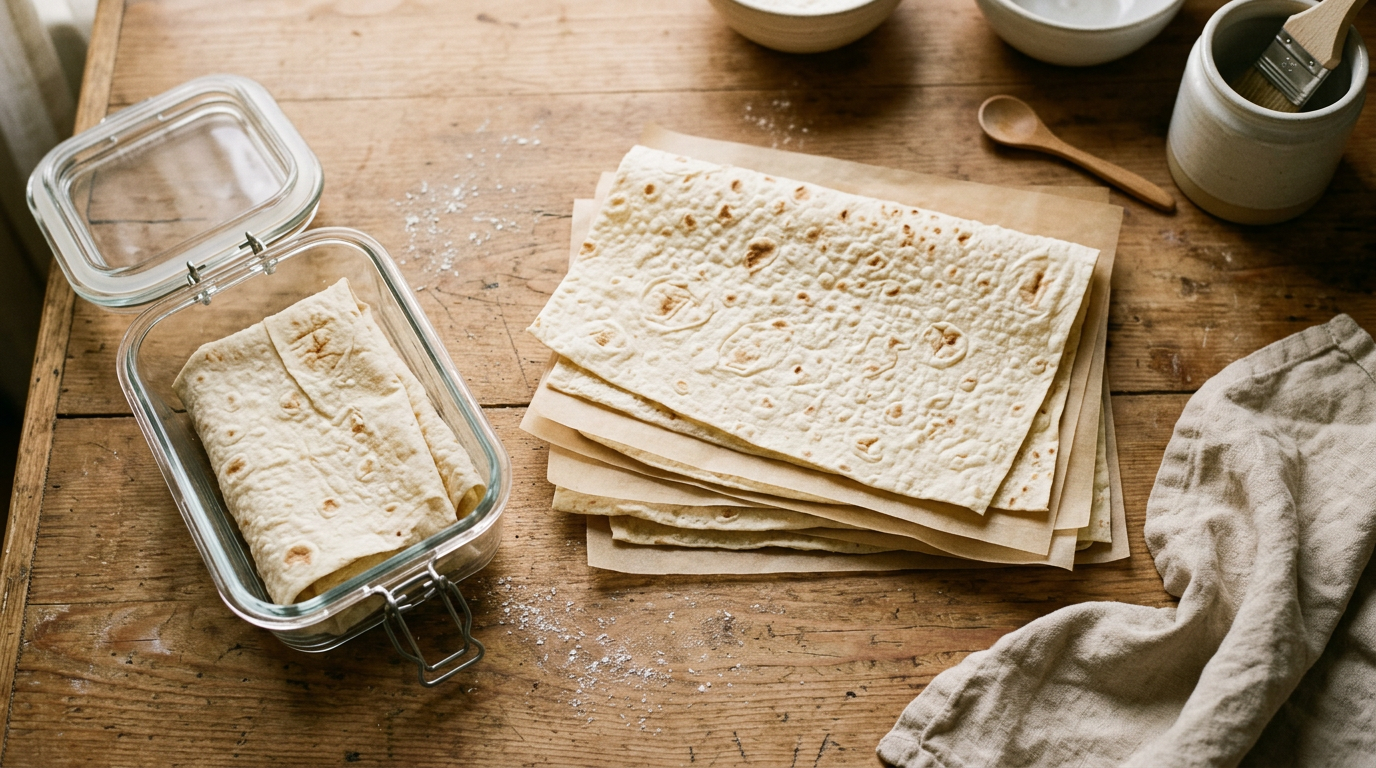
Quick Verdict: The best lavash recipes go far past the classic wrap. From crispy lavash chips and cracker-thin pizza to layered casseroles and even sweet desserts, this paper-thin Armenian flatbread is one of the most versatile ingredients in any kitchen — here are 10 ways to prove it.
If you already know lavash as a wrap bread, you’re only using a fraction of what it can do. Its thin, pliable texture makes it a stand-in for pizza dough, pasta sheets, chips, and even pastry — often with better results than the original. Here are 10 lavash recipes worth trying, organized from savory to sweet.
1. Lavash Pizza
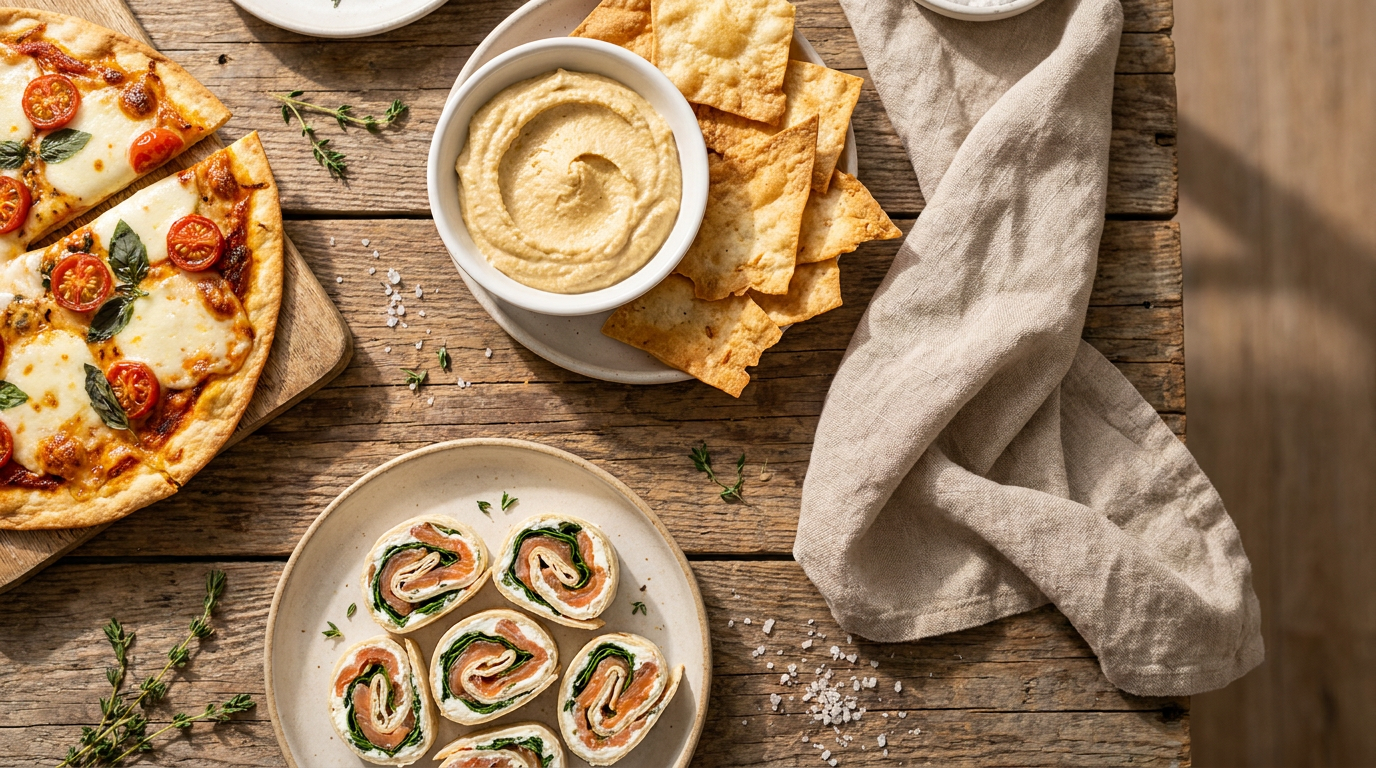
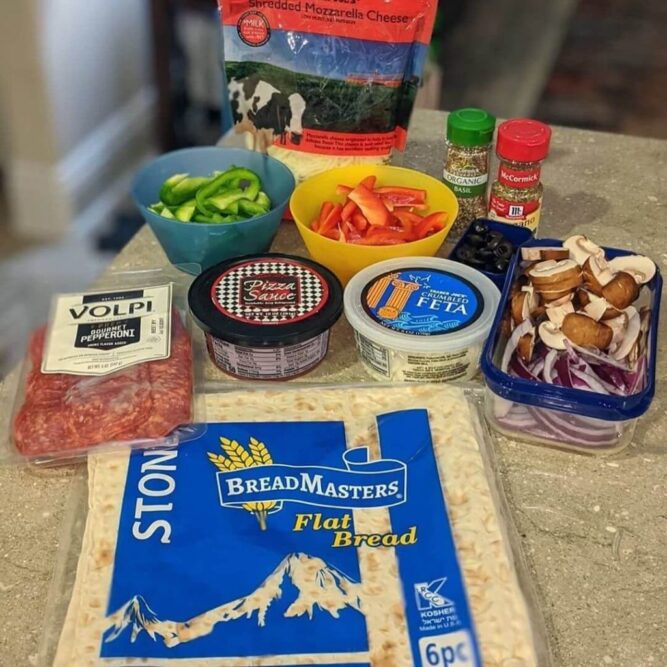
Lay a sheet flat on a baking sheet, top with sauce, cheese, and your favorite toppings, then bake at high heat (475–500°F) for 6–8 minutes. The thinness of lavash means the whole pizza crisps evenly, with none of the doughy center you get from thicker crusts. This is one of the fastest weeknight dinners you can make.
2. Lavash Chips
Cut or tear lavash into triangles, brush lightly with olive oil, sprinkle with sea salt (or za’atar, everything-bagel seasoning, or smoked paprika), and bake at 350°F for 8–10 minutes until golden and crisp. Serve with hummus, baba ganoush, or any dip that needs a sturdy scoop.
3. Lavash Lasagna
Swap traditional lasagna noodles for sheets of lavash, layering them with sauce, cheese, and filling exactly as you would pasta. Because lavash is thinner than noodles, it cooks faster and absorbs sauce beautifully, producing a lighter final dish without sacrificing structure.
4. Lavash Breakfast Wrap
A savory twist on the classic wrap: scrambled eggs, crumbled feta, sautéed spinach, and a drizzle of hot sauce, rolled tightly in a warm sheet of lavash. It holds together far better than a flour tortilla and reheats well for meal-prepped breakfasts.
5. Lavash Nachos
Cut lavash into wedges, bake until crisp (same method as the chips above), then layer with melted cheese, beans, jalapeños, and any nacho toppings you like. The thin, sturdy crunch holds up better under toppings than many traditional chip options.
6. Lavash-Wrapped Baked Brie
Wrap a wheel of brie in a sheet of lavash, brush with melted butter, and bake at 375°F until the cheese is molten and the lavash is golden and crisp. Serve with honey and fruit preserves for an easy, impressive appetizer that takes minutes to prepare.
7. Lavash Crackers with Dips
Similar to chips but cut into smaller, cracker-sized pieces and baked until fully crisp throughout. These keep well in an airtight container for days, making them a great make-ahead pairing for cheese boards, hummus, or baba ganoush.
8. Lavash Roll-Up Pinwheels
Spread a sheet of lavash with cream cheese or hummus, layer with deli meat, roasted vegetables, or smoked salmon, then roll tightly and slice into pinwheels. These make an easy party appetizer or lunchbox addition — no toothpicks required, since lavash holds its shape on its own.
9. Lavash Bread Pudding
An unexpected but excellent use for slightly stale lavash: tear it into pieces, soak in a custard of eggs, milk, sugar, and vanilla, then bake until set. The thin layers create a texture closer to a delicate strata than a dense traditional bread pudding.
10. Sweet Lavash Rolls
Spread a sheet with butter, cinnamon, and sugar (or a thin layer of Nutella), roll tightly, slice into pinwheels, and bake until golden. It’s a shortcut version of cinnamon rolls that comes together in a fraction of the time, using lavash instead of yeasted dough.
FAQ
What can I make with lavash bread besides wraps? Lavash recipes go well beyond wraps — it works as a pizza crust, lasagna noodle substitute, chip or cracker base, dessert pastry, and more, thanks to its thin, pliable texture that crisps easily when baked.
Can you use lavash bread for pizza? Yes. Lavash makes an excellent thin-crust pizza base — top it and bake at high heat for 6–8 minutes for a cracker-crisp result that cooks faster than traditional pizza dough.
Is stale lavash bread still usable? Absolutely. Slightly stale lavash is ideal for chips, crackers, and bread pudding, where a firmer texture actually works in the recipe’s favor rather than against it.
What’s a quick lavash recipe for beginners? Lavash chips are the easiest starting point — just oil, salt, and a short bake. From there, lavash pizza and roll-up pinwheels are both simple, fast options with minimal ingredients.
Do lavash recipes work with whole wheat lavash? Yes, whole wheat lavash works in every recipe above and adds extra fiber and a slightly nuttier flavor, particularly good in pizza and lasagna applications.
Quick Verdict: There are several distinct Armenian bread types— paper-thin lavash for wrapping, hearty matnakash for the table, savory zhingyalov hats stuffed with herbs, and sweet gata and choreg for celebrations. Each has a specific role, and most Armenian households keep more than one on hand at all times.
Understanding the different Armenian bread types — and what each one is actually for — is the best way to appreciate why bread sits at the center of Armenian cuisine. Bread holds a place in Armenian culture that goes far beyond a side dish. It’s woven into weddings, blessings, and daily meals, with recipes and baking techniques passed down through generations largely unchanged for thousands of years.
Lavash: The Everyday Staple
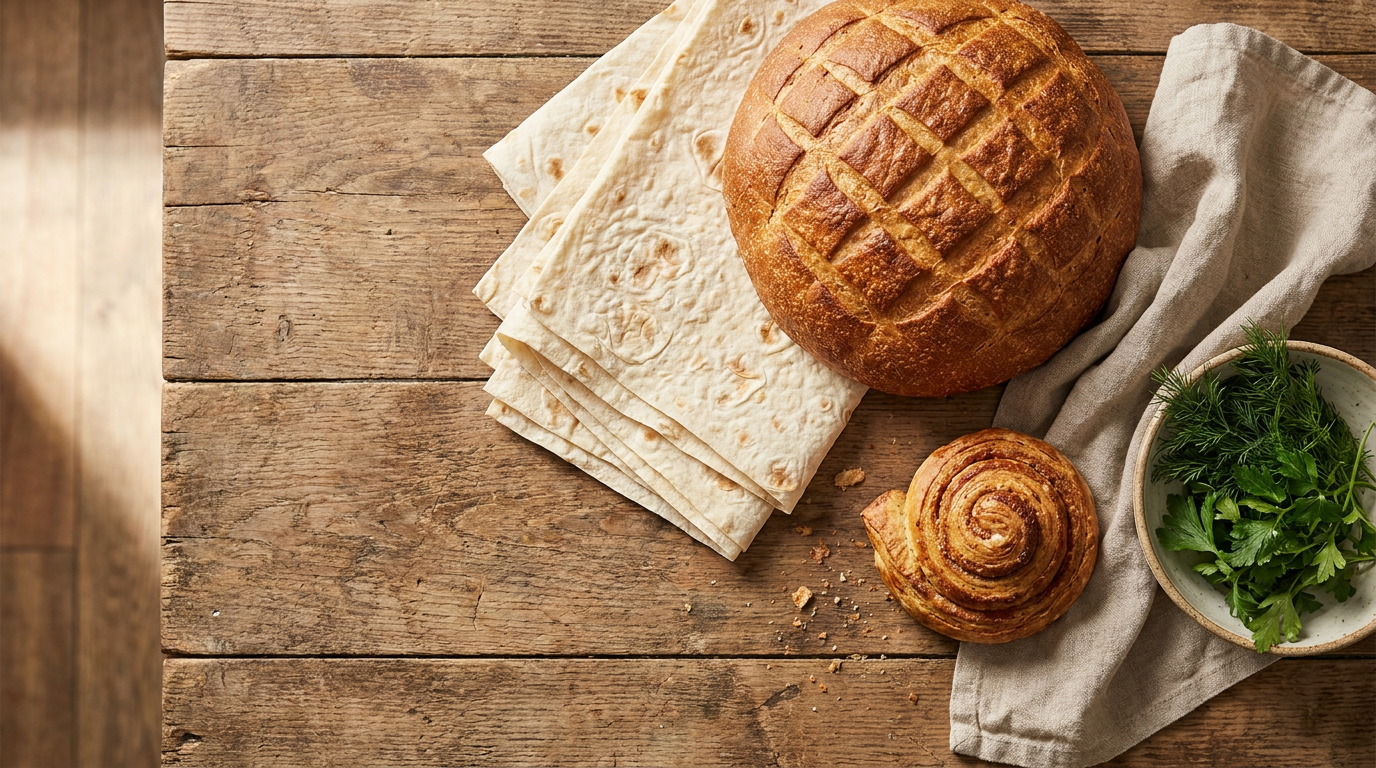
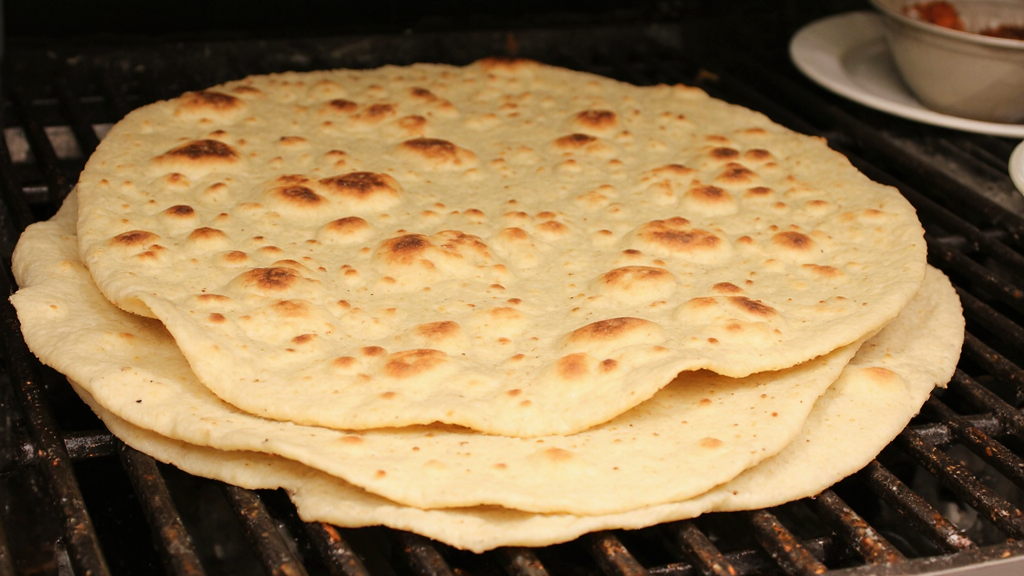
Lavash is the bread most people picture when they think of Armenian baking: a soft, thin, unleavened sheet made from just flour, water, and salt, traditionally baked against the hot walls of a clay tonir oven. It’s so central to Armenian identity that UNESCO recognized its preparation as an Intangible Cultural Heritage of Humanity in 2014.
Lavash is defined by its versatility. Fresh, it wraps around grilled meats and vegetables. Dried, it can be stored for months and rehydrated, or crumbled into soups like khash. It’s the bread Armenians reach for most often, for almost any purpose.
Among the major Armenian bread types, matnakash stands apart from lavash — where lavash is thin and pliable, matnakash is — a round, leavened loaf with a thick, chewy crust and soft interior, often scored with a distinctive crosshatch or grid pattern before baking. The name translates roughly to “kneaded with fingers,” referencing the traditional shaping technique.
Matnakash is closer to what most Westerners think of as “bread” in the everyday sense — sliceable, substantial, and meant to be torn and eaten alongside a meal rather than wrapped around one. It’s the loaf you’ll find at the center of an Armenian family table, served with cheese, herbs, and a spread of small dishes.
Zhingyalov Hats: The Herb-Stuffed Flatbread
A specialty of Armenia’s Artsakh region, zhingyalov hats is unleavened dough rolled thin and stuffed with a mixture of finely chopped greens and herbs — sometimes as many as 20 different varieties, depending on the season and region. It’s folded and cooked on a dry griddle until the dough is lightly charred and the greens inside have wilted into a fragrant, savory filling.
Historically a way to use up an abundance of spring greens, zhingyalov hats has become a beloved dish in its own right, often eaten as a light meal rather than a side.
Gata and Choreg: The Celebration Breads
Not all Armenian bread is savory. Gata is a sweet, layered pastry-bread with a buttery, slightly crumbly filling, often flavored with vanilla or cinnamon and shaped into a spiral or round loaf with a decorative pattern pressed into the top. Choreg is its close cousin — a soft, slightly sweet braided bread, traditionally flavored with mahleb (a spice from cherry pits) and often baked for Easter, sometimes with a dyed egg tucked into the braid.
Both are reserved for special occasions and holidays, standing apart from the everyday breads above as markers of celebration.
Ponak: The Stuffed Bread
Less widely known outside Armenia, ponak is a filled bread similar in spirit to a savory turnover — dough wrapped around a filling (often meat, cheese, or vegetables) and baked until golden. It varies significantly by region and household, making it more of a category of stuffed breads than a single fixed recipe.
What About Markouk and Sangak?
Unlike the Armenian bread types above, markouk and sangak come from different traditions entirely, you may have come across markouk and sangak — both delicious, both worth knowing, but both rooted in different traditions. Markouk (also called Lebanese mountain bread) comes from Levantine cuisine, prized for being even thinner than lavash. Sangak is a thick, stone-baked flatbread with Persian origins. Both pair beautifully with Armenian dishes and are popular across the broader Middle Eastern table, but they’re not traditionally Armenian breads themselves.
Among all Armenian bread types, Lavash is the most widely eaten Armenian bread, used daily for wrapping, dipping, and serving alongside meals. It’s also the bread most associated with Armenian identity internationally.
What is the difference between lavash and matnakash?
Lavash is thin, unleavened, and flexible, ideal for wrapping. Matnakash is a thick, leavened, round loaf with a chewy crust, meant to be torn and eaten at the table rather than wrapped around food.
Is zhingyalov hats bread or a dish?
It’s both — a thin unleavened dough stuffed with a mixture of chopped herbs and greens, then griddle-cooked. It functions as a light meal on its own.
What bread is traditionally served at Armenian celebrations?
Gata and choreg are the two most common celebration breads. Gata is a sweet, layered pastry-bread eaten year-round for special occasions; choreg is a braided sweet bread traditionally baked for Easter.
Are markouk and sangak Armenian breads?
No — markouk originates from Levantine (Lebanese) cuisine, and sangak is Persian in origin. Both are popular across the wider Middle Eastern table and pair well with Armenian dishes, but they aren’t traditionally Armenian.
Now that you know the major Armenian bread types, here’s where to start. Shop our fresh-baked lavash flatbread, baked in our Commerce, California bakery and shipped nationwide
Quick Verdict: Here’s how to store lavash bread properly — 3–5 days at room temperature in a sealed bag, up to 3 weeks refrigerated, and up to 6 months frozen. The trick to keeping it soft isn’t just where you store it — it’s how you seal it and how you bring it back to life before serving
Knowing how to store lavash bread properly is the difference between a soft, pliable wrap and a dry, brittle sheet a few days later. Fresh lavash is best eaten the same day it’s baked, but that’s not always realistic — especially if you’ve ordered a multi-pack online or made a big batch for a family dinner. The good news: lavash is one of the most forgiving flatbreads to store, as long as you follow a few simple rules. Here’s exactly how to keep it soft, fresh, and ready to use for days or even months.
Room Temperature: Best for 3–5 Days
If you plan to use your lavash within the week, room temperature storage is the simplest option.
Let the bread cool completely if it was freshly baked — sealing warm bread traps steam and causes mold.
Stack the sheets with a small piece of parchment paper between each one, so they don’t stick together.
Place the stack in an airtight bag or container, pressing out as much air as possible.
Store in a cool, dry spot — away from direct sunlight or your stove’s heat.
Stored this way, lavash stays soft and pliable for 3 to 5 days. After that, it will start to dry out and become brittle — still edible but better suited for chips or dipping than for wraps.
Refrigerator: Best for 2–3 Weeks
Refrigeration significantly extends lavash’s shelf life without sacrificing much texture, as long as you seal it properly.
Cool completely, then layer with parchment paper the same way as above.
Use a zip-top bag with the air pressed out, or an airtight container — moisture loss is the main enemy here.
Store in the refrigerator’s main compartment, not the door (temperature fluctuates more there).
Refrigerated lavash stays fresh for 2 to 3 weeks. It will firm up slightly in the cold, but a quick reheat (see below) brings back its pliability.
Freezer: Best for Up to 6 Months
Freezing is the best option if you’ve bought in bulk or want to stock up without worrying about spoilage.
Cool completely before freezing — never freeze warm bread.
Layer sheets with parchment paper between each one, exactly as with fridge storage.
Wrap the stack tightly in plastic wrap, then place it inside a freezer-safe bag or container. This double layer prevents freezer burn.
Label the bag with the date — frozen lavash is best used within 6 months for optimal texture, though it remains safe well beyond that.
To thaw: move the stack to the refrigerator overnight, or let it sit at room temperature for about 30–60 minutes before use. Avoid microwaving straight from frozen — it can turn gummy in the center.
How to Revive Stale or Refrigerated Lavash
Cold or slightly dry lavash doesn’t mean it’s ruined — a few seconds of the right heat brings it right back:
Stovetop (best method): Hold the bread briefly over a gas burner on low, flipping once or twice, for about 5–10 seconds per side.
Dry skillet: Warm a dry pan over medium heat and press the lavash against it for 10–15 seconds per side.
Oven: Wrap in foil and warm at 300°F for 5 minutes.
Microwave (last resort): Dampen a paper towel, wrap the bread in it, and microwave for 10–15 seconds only — any longer and it turns tough.
A light mist of water on the bread before reheating helps restore softness, especially for refrigerated or frozen lavash.
Signs Your Lavash Has Gone Bad
Lavash is a low-moisture bread, so it’s more prone to drying out than molding — but it’s still worth knowing the warning signs:
Visible mold — any fuzzy spots (white, green, or black) mean it’s time to discard the whole batch, not just the affected piece.
Off smell — a sour or musty odor is a clear sign it’s no longer safe to eat.
Excessive hardness — dry, cracker-like lavash isn’t spoiled, just stale. It’s still safe to eat and great for dipping or turning into chips, even if it’s no longer ideal for wraps.
FAQ
How long does lavash bread last at room temperature?
Properly sealed lavash stays fresh at room temperature for 3 to 5 days. After that, it dries out but remains safe to eat.
Can you freeze lavash bread?
Yes. Layered with parchment paper and sealed in a freezer-safe bag, lavash freezes well for up to 6 months without significant loss of quality.
How do you keep lavash bread soft?
Store it in an airtight bag or container with as much air removed as possible, and reheat briefly (5–10 seconds per side on a stovetop or dry skillet) before serving to restore softness.
Does lavash bread need to be refrigerated?
No, but refrigeration extends its shelf life from about 5 days to 2–3 weeks, making it a good option if you don’t plan to use it all within the week.
Can you eat stale lavash bread? Yes — stale lavash is simply dry, not spoiled. It’s perfect for making crispy lavash chips or using as a base for dips, even past its ideal wrap-and-roll stage.
Lavash is the superior choice for wraps, health-conscious cooking, and long-term storage (1.2g fat/100g, 3–6 months dried). Naan excels as an accompaniment to Indian curries, thanks to its soft, sauce-absorbing texture. For most everyday kitchens, lavash offers unmatched versatility and practicality.
Lavash wins for wraps & health: Just 1.2g fat per 100g vs naan’s 6.7g, with superior tear-resistant flexibility and better calorie control.
Naan excels for Indian cuisine: Soft, pillowy texture perfectly absorbs rich curries and sauces like butter chicken.
Unmatched versatility & storage: Use lavash for wraps, pizza crusts, chips, or quesadillas. Keeps 3–6 months dried vs naan’s few-day shelf life.
Cultural heritage shapes use: UNESCO-recognized Armenian lavash serves as a flexible wrapper, while Mughal-era naan functions as a sauce-absorbing accompaniment.
The choice between lavash bread vs naan can feel overwhelming when stocking your kitchen. Both are beloved staples, yet they bring distinct qualities to your table. Lavash flatbread, an unleavened bread recognized by UNESCO as part of Armenian cultural heritage, offers a thin, flexible texture. Naan, on the other hand, is a leavened flatbread from the Indian subcontinent known for its soft, pillowy bite. Understanding these differences helps you match each bread to your cooking style and dietary priorities.
Quick Comparison: Lavash vs Naan at a Glance
Attribute
Lavash Bread
Naan Bread
Origin
Armenian & Middle Eastern (6th c. B.C.)
Persian, spread to India (2,500 yrs ago)
Cultural Heritage
UNESCO Intangible Cultural Heritage (2014)
Mughal era delicacy (1520s), royal staple
Leavening
Traditionally unleavened (or ttkhmor starter)
Always yeast-based
Thickness
2–3 mm
Substantially thicker
Texture
Thin, flexible, pliable; brittle when dried
Soft, pillowy, chewy with air pockets
Cooking Time
15–40 seconds
60–90 seconds
Key Ingredients
Wheat flour, water, salt, optional seeds
Flour, yeast, water, salt, ghee, yogurt
Calories (per 100g)
281 kcal
286 kcal
Fat (per 100g)
1.2g
6.7g
Shelf Life
3–6 months (dried); 30 days commercial
Few days (requires quick consumption)
Best Uses
Wraps, chips, pizza crust, quesadillas
Scooping curries, sauces, rich mains
Origin and Cultural Heritage
Lavash: Armenian and Middle Eastern Roots
Lavash belongs to Armenian and Middle Eastern culinary traditions, recognized not just as food but as a living cultural practice. Archeologists found ancient fire pits in Areni caves dating back to the 6th century B.C., strikingly similar to the tonir ovens still used today. The bread’s name carries linguistic significance: folk etymology traces it to “lav-hats” (good bread), “lovaz” (palm of the hand), and “lavaz” (very thin). Tehran residents still call it nūn-i armanī (Armenian bread), separating it clearly from Persian sangak or Turkish varieties.
In 2014, UNESCO added lavash to its Intangible Cultural Heritage list, honoring its role in strengthening family and community bonds through communal baking.
Naan: Persian Origins & Indian Subcontinent History
Naan originated in Persia, where the word simply means “bread.” It spread across Central and West Asia before arriving in the Indian subcontinent during the Islamic Delhi Sultanate period. Indo-Persian poet Amir Khusrau documented two varieties in the 1300s: Naan-e-Tunuk (light/thin) and Naan-e-Tanuri (heavy, tandoor-baked). During the Mughal era (1520s), naan was reserved for nobility due to the skill required to leaven dough. By the 1700s, it transitioned from royal delicacy to an accessible staple.
Leavening Methods & Texture Differences
The fundamental difference lies in leavening. Traditional lavash is unleavened, made quickly with flour, water, and salt. Some regional versions use ttkhmor, a sourdough starter. Naan always relies on yeast, producing carbon dioxide that creates its signature air pockets and fluffiness.
Lavash measures just 2–3 mm thick, cooks in 15–40 seconds, and remains highly flexible when fresh. Naan bakes for 60–90 seconds at higher heat, developing a soft, pillowy crumb with charred edges. While lavash rolls tightly without tearing, naan’s thicker, spongy structure tends to fall apart when used as a wrapper.
Nutritional Profile & Health Comparison
When comparing lavash vs naan calories, the per-100g difference is modest (281 vs 286 kcal). However, macronutrient profiles diverge significantly:
Lavash: 60g carbs, 8.7g protein, 1.2g fat. Zero added oils in traditional recipes. Delivers ~90 calories per serving.
Naan: 46g carbs, 10.2g protein, 6.7g fat. Higher due to yogurt, ghee, and occasional eggs. Ranges 262–370 calories per serving.
Both rank high on the glycemic index (lavash: 72, naan: 71). Lavash’s thin profile enables precise portion control, while naan’s density makes calorie tracking less intuitive. For anyone asking “healthier lavash or naan”, lavash is the clear leaner option.
Tandoori Pairings: Absorbs juices from kebabs and grilled meats
Sweet Variations: Brushed with honey, cinnamon, or ghee for dessert flatbreads
Storage, Shelf Life & Convenience
Lavash wins for pantry stability. Dried lavash keeps 3–6 months at room temperature. Commercial packages last ~30 days, and frozen lavash maintains quality for up to a year. Simply sprinkle dried sheets with water and wait 15–20 minutes to restore flexibility.
Naan requires immediate consumption. Its high moisture and dairy content accelerate staling, typically limiting shelf life to a few days unless frozen.
Can You Substitute One for the Other?
Substitution works in most recipes except when texture is critical. For lavash vs naan for wraps, lavash performs better because it rolls tightly without tearing. Naan makes a poor wrap substitute due to its soft, crumbly structure. Conversely, naan’s thickness and spongy crumb excel at scooping thick sauces, where lavash might tear or become too delicate.
Where to Buy Authentic Lavash and Naan
Commercial naan is widely available but often lacks fresh texture and contains preservatives. Lavash appears near tortillas at major supermarkets. For authentic, traditionally prepared options, shop flatbreads that deliver superior taste, flexibility, and clean ingredient lists.
Making the Right Choice: Lavash vs Naan for Your Kitchen
The Calorie Conversation
If you’re monitoring intake, the numbers tell a compelling story. Lavash delivers ~90 calories per serving with 0.5g fat, while naan packs 262–370 calories and 5–9g fat. Traditional lavash requires only flour, water, and salt, whereas naan incorporates dairy and fats that increase caloric density. Lavash’s thin sheet also allows exact portioning.
Versatility and Practical Applications
Lavash’s adaptability extends far beyond wraps. Cut it into triangles, brush with olive oil, and bake for restaurant-quality chips. Use it as a low-fat pizza base or garlic bread alternative. Naan shines in specific applications—mainly as an accompaniment to Indian curries—but this specialization limits everyday versatility compared to lavash.
The Breadmasters Advantage
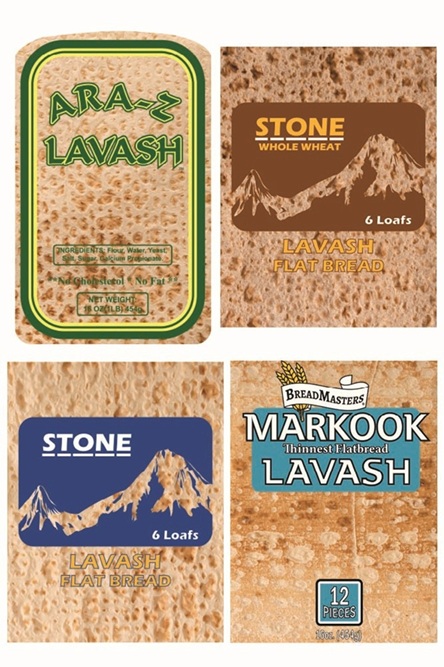
For those seeking authentic, high-quality lavash, Breadmasters offers premium options that deliver traditional taste with modern convenience. Their ARA-Z Lavash represents the gold standard—thin, flexible, and perfect for wraps. The Markook variety provides an equally thin alternative with subtle texture variations, while Stone Lavash offers a heartier option for those preferring slightly more substantial bread. These products eliminate the need for specialized equipment while maintaining UNESCO-recognized traditional characteristics.
Conclusion
The lavash vs naan debate becomes straightforward when prioritizing everyday practicality. Lavash delivers fewer calories, superior wrap performance, and works across breakfast, lunch, dinner, and snacks. Naan definitely shines with Indian curries, but lavash adapts to pizza crusts, chips, and long-term storage. For most home kitchens, lavash proves the smarter, healthier, and more versatile investment.
Stock your kitchen with authentic flatbreads and discover why this ancient bread continues to earn its place in modern meal prep. Your wraps will roll tighter, your calories will stay lower, and your culinary options will expand exponentially.
Frequently Asked Questions: Lavash vs Naan
Q: What’s the main difference between lavash and naan bread?
A: The primary difference lies in leavening and thickness. Lavash is traditionally unleavened and extremely thin (2–3mm), creating a flexible, wrap-friendly texture. Naan is always yeast-based, resulting in a thicker, soft, pillowy bread with air pockets ideal for scooping sauces.
Q: Can I use naan and lavash interchangeably in recipes?
A: You can substitute them in most recipes, but they perform differently. Lavash excels at wraps because it rolls tightly without tearing, while naan’s soft texture makes it prone to falling apart. Naan excels at scooping thick curries, where lavash might be too thin.
Q: Which flatbread is healthier—lavash or naan?
A: Lavash is the healthier option with significantly less fat (1.2g per 100g vs naan’s 6.7g) and delivers ~90 calories per serving versus naan’s 262–370. Traditional lavash contains no added fats, while naan includes yogurt, ghee, and sometimes eggs.
Q: Is naan safe for people with diabetes or blood sugar concerns?
A: Naan has a glycemic index of 71, which can raise blood sugar. When eaten as part of a balanced meal with protein, vegetables, and healthy fats, its impact can be reduced. Consume in moderation and pair strategically to manage glucose levels.
Q: How long can I store lavash and naan bread?
A: Dried lavash keeps 3–6 months at room temperature, commercial varieties last ~30 days, and frozen lavash maintains quality for up to a year. Naan requires consumption within a few days and does not store well long-term due to its moisture and dairy content.
Armenian flatbread baked using time-honored methods is becoming harder to find, but we’ve been preserving this tradition for over 32 years. At Breadmasters ARA-Z, we craft lavash bread, sangak and markook in our Commerce, California bakery, following armenian flatbread recipes passed down through generations of Armenian bakers. Our family’s dedication to authentic baking means no artificial preservatives or shortcuts. We use wholesome ingredients and ancient techniques. In this piece, we’ll share our story and explain what makes our flatbreads authentic. You’ll also learn how to enjoy these breads in your own kitchen.
The Story of Breadmasters ARA-Z: 32 Years of Armenian Tradition
Our Family Heritage
We founded Breadmasters ARA-Z in 1994, but our story begins much earlier than that. Our founder, Ara Zethilan, is a second-generation baker who was born in his father’s bakery in Lebanon. Bread wasn’t just our business. The fabric of our family identity was woven with it from the very beginning.
Ara grew up surrounded by flour-dusted ovens and the aroma of fresh-baked flatbread. This shaped everything he knew about food, family and community. His father passed down recipes and an entire philosophy about bread-making. Armenian tradition holds that the preparation of lavash was a ritual that brought families together, accompanied by conversations, songs and prayers. We carry that same spirit into our bakery.
Bread holds sacred meaning for Armenians. UNESCO recognized Lavash as an Intangible Cultural Heritage in 2014 and acknowledged its role as an expression of Armenian culture. This wasn’t just validation. It was a reminder of what we’ve always known: bread connects us to our ancestors and our identity.
The Experience from Armenia to America
Armenian families brought their bread-making traditions to America out of necessity and love. Political upheaval and conflict throughout the 20th century scattered Armenians across the globe. They settled in new communities while holding onto their cultural touchstones. Many families opened bakeries as both a survival strategy and a way to preserve heritage.
We set up our bakery in Commerce, California, and joined a wave of Armenian bakers who introduced traditional flatbreads to Southern California. Families fled Lebanon’s civil war in the 1980s and founded the first Armenian bakeries in Los Angeles. They opened shops in North Hollywood and Glendale. We followed in their footsteps and brought authentic lavash, sangak and markook to our community.
We weren’t just selling bread. We were building bridges. Armenian bakeries became popular beyond the Armenian community and introduced traditional flatbreads to neighbors who had never experienced these ancient recipes. We watched our customer base grow from Armenian families who sought a taste of home to restaurants and home cooks across America.
Why We Started Making Traditional Flatbread
We started Breadmasters ARA-Z because authentic Armenian flatbread was disappearing from American tables. Mass production couldn’t replicate the techniques Ara learned in his father’s bakery. Commercial operations took shortcuts that stripped away the soul of traditional baking.
Our mission became clear: preserve the centuries-old methods that make Armenian flatbread authentic. We source traditional ingredients and follow time-honored recipes passed down through generations of Armenian bakers. We refuse to compromise quality for convenience. Each flatbread we produce connects to archeological evidence showing lavash was baked in the Armenian Highlands as far back as the 3rd millennium BCE.
We’ve been the premier Armenian flatbread bakery in the United States for over 32 years now. We operate our family-run business with the same values that motivated Armenian bakers before us: hard work, determination and love for family and culture. You taste our lavash bread or traditional markook and experience more than food. You’re tasting heritage, preserved one batch at a time in our Commerce bakery.
What Makes Armenian Flatbread Authentic
Authenticity in bread-making isn’t about complexity. It’s about respecting the wisdom of methods refined over thousands of years.
Traditional Ingredients We Use
Our lavash bread starts with the same three ingredients Armenian bakers have used for millennia: wheat flour, water, and salt. That’s it. No preservatives, no dough conditioners, no shortcuts. Many traditional Armenian bakers prepare lavash using an “old dough” method, where a fermented remnant from the previous batch, called ttkhmor, acts as a natural sourdough starter. This yeasty starter gives the bread a tart flavor and creates those characteristic charred, bubbly spots on the surface.
We’ve adapted this ancient technique for our modern bakery while maintaining the process’s integrity. Some recipes call for a small amount of yeast or baking soda to help with leavening, but the foundation remains unchanged. These ingredients’ simplicity allows quality wheat flour’s flavor to shine through in every bite.
The Ancient Baking Process
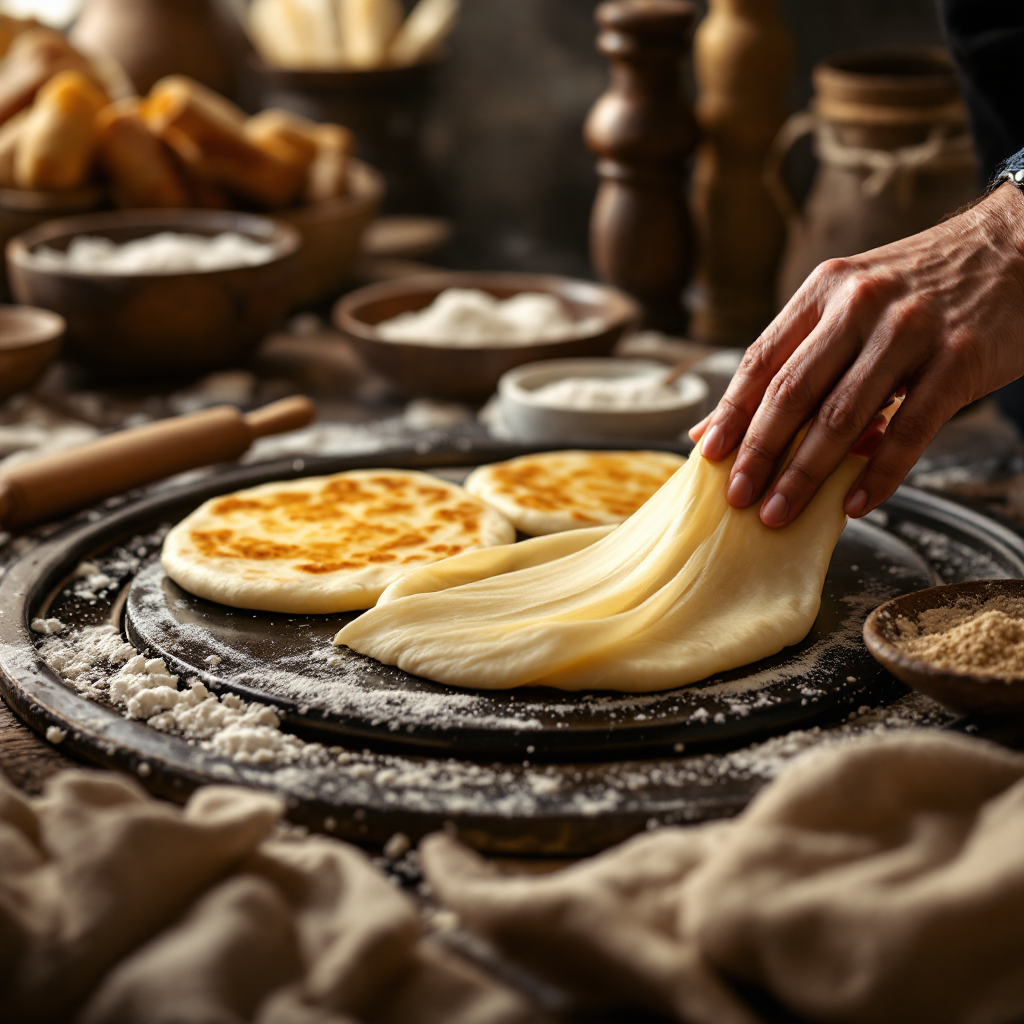
Walk into our Commerce bakery and you’ll see methods that haven’t changed since the 6th century B.C., when tonirs were first found in caves in Armenia’s Areni region. The traditional process involves a small group of women working together. They roll dough into balls and stretch those balls into thin layers across a special oval cushion padded with wool or hay.
The coordination required is remarkable. A baker takes the cushion with stretched dough and plunges it into the tonir. The dough slaps against the hot clay wall. The bread bakes in thirty seconds to a minute. The lavash begins to bubble and puff, developing its final shape from the intense heat. Then it’s pulled from the oven wall using a long metal hook.
This group work strengthens family and community ties. Traditional Armenian households saw the family’s eldest woman blend the dough at sunrise, and the whole process was accompanied by conversations, songs, and prayers. We keep that spirit alive in our bakery, even as we’ve scaled production.
What Is Armenian Flatbread Called
Lavash is the Armenian name for this traditional thin bread. The word appears across multiple languages with slight variations: լավաշ in Armenian, lavaş in Turkish, nanê loş in Kurdish, لواش in Persian, and ლავაში in Georgian. UNESCO inscribed “lavash, the preparation, meaning and appearance of traditional bread as an expression of culture in Armenia” on its Intangible Cultural Heritage list in 2014.
Regional variations exist throughout Western Asia and the areas surrounding the Caspian Sea. What you call it depends on where your family originated, but the essence remains the same.
How Lavash Bread Is Different from Other Flatbreads
Lavash is paper-thin compared to most flatbreads. Tortillas are chunkier and pita bread develops a pocket, while lavash stays flat and pliable. The thickness makes all the difference. We roll our dough to ⅛ inch or thinner. This creates a bread that’s soft enough for wraps yet sturdy enough to dip into stews.
Lavash can be made leavened or unleavened based on preference, unlike pita. The baking method also sets it apart. A tonir cooks lavash from both sides through conductive heat from the clay wall and radiant heat from the fire below. This dual-heat approach creates the distinctive texture: burnt crispy spots on a bread that remains soft and pliable.
Fresh lavash is soft, but it can also be dried for preservation, lasting up to six months. Rehydrate it by misting with water and letting it rest under a towel.
Our Armenian Flatbread Collection
Our bakery produces four distinct types of flatbread, each serving different culinary traditions and purposes.
Classic Armenian Flatbread Lavash
Our classic lavash remains the life-blood of what we do. This soft, pliable bread is served rolled around local cheeses, greens, or meats. Fresh lavash works beautifully for wraps. Dried lavash can be preserved for up to six months. To rehydrate it, mist the bread with water and cover it with a towel until it softens and becomes pliable enough to roll without cracking.
The versatility makes it indispensable in Armenian kitchens. Wrap it around grilled meats, dip it into hummus or baba ganoush, or stuff it with vegetables for a quick lunch. Armenian culture gives lavash a ritual role in weddings, where it’s placed on the newlyweds’ shoulders to bring fertility and prosperity.
Lahmajun Armenian Flatbread
Lahmajun, often called Armenian pizza, features a thin, crispy flatbread base topped with seasoned ground lamb or beef. The topping is more like a meaty veneer than a sauce, spread paper-thin across the dough before baking. We blend the meat with finely ground onion, red bell pepper, garlic, parsley, tomato paste, and warm spices including allspice and paprika.
The topping emerges from the oven steaming and moist but not wet, thanks to draining excess water from the vegetables before mixing. We bake each flatbread at 500 degrees until the crust browns around the edges in about five minutes. Serve it with a squeeze of fresh lemon juice or roll it around a crisp vegetable salad, burrito-style.
Very Thin Crispy Armenian Flatbread Varieties
Those who want an exceptionally thin option will find our crispy varieties perfect for dipping or baking into chips. These versions are rolled even thinner than standard lavash and create delicate, brittle crackers when dried.
Traditional Markook and Authentic Sangak Options
Our Markook, also known as Saj bread, is the thinnest lavash available. These large 9″x12″ sheets are soft and pliable, ideal for authentic wraps and shawarma without breaking. Each package contains 48 pieces total and offers incredible value. Customers use Markook to cut carbs and appreciate its wholesome ingredients and thinness.
Our authentic Sangak bread is baked on a bed of small river stones, just as Persian armies did starting in the 11th century. We offer both Sangak Plain and Sangak Multi-Grain varieties topped with poppy or sesame seeds. The stones create Sangak’s characteristic corrugated texture.
Ready to experience these traditional flatbreads? Shop now at and bring authentic Armenian baking to your table.
What Our Customers Say About Breadmasters ARA-Z
Restaurant owners who choose our flatbread tell us the same thing: authenticity matters to their customers. Successful Armenian restaurants make hundreds of fresh flatbreads daily because diners can taste the difference between traditional methods and shortcuts. You can’t fake it when you’re serving a community that grew up eating lavash at their grandmother’s table.
Reviews from Restaurant Owners
Restaurant kitchens demand consistency and quality. Chefs who order from us appreciate that our flatbread arrives ready to use and maintains the soft texture and pliable nature that makes Armenian flatbread lavash irreplaceable for wraps and accompaniments. Several restaurant owners have expanded their customer base beyond Armenian diners because our traditional flatbread introduces new audiences to authentic flavors they’ve never experienced.
One pattern emerges again and again: restaurants that serve our flatbread create an atmosphere that transports diners back to Armenia. Some customers describe the experience as visiting grandma’s house, where the same food and environment bring back memories. That’s what we want to preserve with every batch we bake.
Home Cooks Share Their Experience
Home cooks value different qualities in our flatbread. They mention the simplicity first. A flatbread stuffed with finely diced herbs and green vegetables is both simple and filling, perfect for weeknight dinners or weekend entertaining. The versatility appeals to families who want to cut carbs or seek lighter alternatives to traditional bread.
Our customers appreciate that they can wrap grilled vegetables, turkey, or hummus for satisfying lunches without complicated preparation. Some crisp our very thin crispy Armenian flatbread in the oven for lavash chips and pair them with dips for gatherings. The traditional markook works beautifully for authentic wraps that don’t break or tear.
How Our Flatbread Brings Families Together
Lavash has always strengthened family and community ties. The group work involved in traditional baking created bonds that extended beyond the kitchen. Families who gather around our flatbread participate in that same communal experience.
Customers tell us our lavash brings a fresh-baked touch to their tables and connects them to heritage even when they’re thousands of miles from Armenia. What we’re selling isn’t just flatbread. We’re preserving the ritual, the memory, and the cultural expression that makes Armenian bread meaningful across generations.
How to Order and Enjoy Our Flatbread
Where to Buy Breadmasters ARA-Z
You can order our authentic Armenian flatbread with ease. Shop now at and browse our complete collection. Our ARA-Z Lavash Flatbread starts at $31.99. Mini lavash 6-packs are available for $38.99. Our Lavash Variety Pack costs $32.99 if you want variety. Our traditional markook is the thinnest flatbread option and ranges from $32.99 to $55.99. Authentic sangak lovers can choose Plain Flatbread 5-packs at $54.99 or multi-grain varieties at $55.99.
Simple Armenian Flatbread Recipe Ideas
Lavash bread works well in savory and sweet applications. Wrap scrambled eggs, hash browns and cheese inside fresh lavash at breakfast. Fill it with grilled chicken, vegetables or falafel at lunch and make satisfying wraps. Cut lavash into wedges and brush with olive oil. Season with herbs and bake until crispy. You get homemade chips that pair well with hummus or baba ganoush. Use lavash as thin-crust pizza at dinner and top it with sauce and cheese. You can even create dessert wraps by spreading Nutella or fruit preserves inside.
Storage and Reheating Tips
Fresh lavash tastes best the same day, but proper storage extends its life. Store it in a ziplock bag at room temperature up to 3 days. You can freeze it layered with parchment paper up to 1 month. Mist dried lavash with water and cover with a towel until it becomes pliable again.
Never reheat flatbread in the microwave. This makes it rubbery. Preheat a skillet over medium heat instead and place the flatbread inside. Cover with a lid. Sprinkle water on the bread before covering so you create steam. Heat several minutes until warm, then remove the lid and crisp the crust.
Conclusion
Armenian flatbread represents more than just food for us at Breadmasters ARA-Z. We’ve preserved ancient baking techniques for over 32 years because these traditions connect families to their heritage. Each flatbread we craft in our Commerce, California bakery follows the same methods Ara learned in his father’s bakery. From classic lavash and lahmajun to traditional markook and sangak, we honor these time-tested recipes.
Whether you’re a restaurant owner seeking authentic flavors or a home cook learning about Armenian cuisine, our flatbreads bring generations of tradition to your table. Visit now to experience the difference that traditional baking makes and taste the heritage we’ve preserved in every batch.
FAQs
Q1. What is the traditional name for Armenian flatbread?
A1. Lavash is the traditional Armenian name for this thin flatbread. It’s made from wheat dough and traditionally baked in a clay oven called a tonir. The word appears across multiple languages with slight variations, but lavash remains the most recognized term for this ancient bread that has been part of Armenian culture for thousands of years.
Q2. Is lavash considered part of Armenian or Iranian cuisine?
A2. Lavash is a traditional bread that forms an integral part of Armenian cuisine and cultural heritage. In 2014, UNESCO recognized lavash as an Intangible Cultural Heritage of Armenia, acknowledging its role as an expression of Armenian culture. While variations of flatbread exist across the region, lavash has deep roots in Armenian tradition dating back to the 3rd millennium BCE.
Q3. What are the health benefits of eating lavash bread?
A3. Lavash is a lighter bread option that’s low in fat and contains no cholesterol. Traditional lavash is made with simple, wholesome ingredients: wheat flour, water, and salt, without artificial preservatives or additives. However, since it’s primarily made from refined carbohydrates when using white flour, it’s best consumed in moderation as part of a balanced diet.
Q4. How is lavash different from other types of flatbread?
A1. Lavash is exceptionally thin compared to most flatbreads, rolled to approximately ⅛ inch or thinner. Unlike pita bread which develops a pocket, lavash stays flat and pliable. It’s baked using a unique dual-heat method in a clay oven that creates distinctive charred spots while keeping the bread soft and flexible, making it perfect for wraps and dips.
Q5. How should you store and reheat lavash to maintain its quality?
A1. Fresh lavash can be stored in a ziplock bag at room temperature for up to 3 days, or frozen with parchment paper between layers for up to 1 month. To reheat, never use a microwave as it makes the bread rubbery. Instead, use a covered skillet over medium heat, sprinkling water on the bread to create steam, then remove the lid to crisp the crust.
What is markouk bread, and why is this traditional flatbread called “the king of Middle Eastern unleavened flatbreads”? Markouk bread, also known as markook flatbread or shrak, is a Levantine specialty that stands out for its size and thinness. This Lebanese markouk bread measures about 2 feet in diameter and stretches to translucent thinness (0.5 to 2 mm). A saj is used to cook it and creates its distinctive texture. We’ll explore what makes this flatbread unique in this piece. You’ll learn how it’s prepared and the ways you can enjoy it today.
Quick Verdict: Markouk is the thinnest flatbread in the Levant — nearly translucent, made from just flour, water, and salt, cooked on a domed saj griddle. It’s the most versatile wrapping bread available, ideal for shawarma, manakish, and low-carb eating.
What Is Markouk Bread?
Definition and Characteristics
Markouk bread is an unleavened flatbread that stands out for being extraordinarily thin and large. This Lebanese specialty measures between 50 to 65 cm in diameter and achieves a thickness of just 0.5 to 2 mm. You can hold it up to light and see through it almost completely. Handling this paper-like bread requires skill during both preparation and cooking.
Bakers combine half white flour and half wheat flour with water, salt, and either yeast or sourdough to make the dough. These simple yet specific ingredients give the bread a slightly nutty, earthy flavor that complements both savory and sweet accompaniments. Many homemade versions incorporate dry yeast as a rising agent, even though we classify it as unleavened. Warm water activates the fermentation process.
Markouk has a texture that sets it apart from other Middle Eastern breads. You can wrap it around fillings without tearing because it’s flexible enough. Fresh bread develops a soft, slightly chewy quality. Bakers can fold the bread after baking and store it in nylon bags, where it maintains its pliability. Dried bread keeps perfectly for almost fifteen days when layered and protected by cloth.
Regional Names and Variations
Multiple names exist for this flatbread in the Levant, and each reflects local dialects and traditions:
Markook/Markouk (مرقوق): Derived from the Arabic word “raqiq” meaning delicate, this is the most common name
Shrak (شراك): Popular in Jordan and Palestine, people make it ahead of Eid celebrations
Khubz ruqaq (رقاق): Another variation emphasizing its thin nature
Khubz rqeeq (رقيق): Used in various Arab countries
Mashrooh (مشروح): Found in certain regions of the Levant
Saj bread: Named after the cooking equipment itself
Palestinian shrak is different from markook baked in clay ovens. Lebanese versions remain an everyday choice for wraps and meze spreads. Jordanian shrak is a Bedouin staple. Each regional variation maintains the characteristic thinness but may differ slightly in diameter based on available equipment.
Traditional Cooking Method (Saj)
The saj transforms simple dough into this remarkable flatbread. This convex metal griddle resembles an inverted wok and measures 60 to 100 cm in diameter. Wood fires heated the saj in Lebanese villages, but modern versions run on electric or gas heat sources.
Baking happens fast. Bakers stretch the dough over a round cushion called a “kara” before they overturn it onto the preheated saj. The griddle’s domed shape allows the large, thin dough to cook evenly. Each side takes only 30 to 60 seconds to bake. Small air bubbles form on the surface during this time and edges begin to lift and crisp. The bread browns fast and must be removed right away to avoid tearing.
Women in rural Lebanon continue this tradition. They stretch dough on a wide-surfaced stool called a “tabliyyé” and widen it with circular finger motions. The “hall” technique involves passing dough from arm to arm with rotating movements for even spreading. Modern bakeries have adapted these methods while they maintain the thinness that defines authentic markouk bread.
Origin and History of Markouk Bread
Ancient Bedouin Roots
Flatbreads in the Levant trace back an astounding 14,000 years to the Natufian people, who fire-baked early versions on hot stones in what we now call the Levant region. These hunter-gatherers used primitive sickles to harvest wild cereals and developed mortars to produce finer flour, which led to breads we recognize today. Markouk bread as we know it emerged much later, but these ancient baking traditions set the stage for the region’s flatbread culture.
Bedouin communities played a pivotal role in developing the shrak variation of this bread. Bedouin shrak evolved approximately 200 years ago under Ottoman Empire rule and became a nomadic staple made with just water, wheat, and salt. The bread’s straightforward recipe and rapid cooking method made it ideal for nomads and farmers who formed the backbone of Levantine life. Bedouins diluted their dough mixture and kneaded it to a diameter of about three feet to feed whole families. Bedouin wedding traditions incorporated the liquid dough form, with the groom’s mother dipping her hands in it and smearing the front doorstep before the bride entered.
Spread Across the Levant
Historians found several references showing Levantines have eaten this bread for centuries, though no records pinpoint its exact origin. The earliest documented mention appears in a 10th-century cookbook by Ibn Sayyar al-Warraq, who called it “ruqaq” and described it as large, paper-thin bread. This historical reference confirms the bread’s presence in the region for over a millennium.
German expert Gustaf Dalman studied Palestinian foods during the early 1900s and noted that markook also referred to flatbread made in a tannour oven, sometimes with a bit of leavening. The culinary story traces back to ancient Levantine civilizations, including Phoenicians and Canaanites, who built grain-based diets and flatbread traditions that endure today. The bread became embedded in daily life across these regions, from Syria to Lebanon and Palestine.
Cultural Significance Today
Markouk remains a daily staple in Lebanese households. Its large, paper-thin shape proves ideal for wrapping falafel, grilled meats, or eating with mezze. The bread serves as both a utensil and food source. People fold it with their fingers into a cone shape, which allows them to grasp food without getting dirty and functions as a spoon.
Women make markouk using traditional methods, though men participate by fueling fires or helping with preparation. Women in Lebanese villages still cook their bread on a saj over wood fires and preserve centuries-old techniques. Small neighborhood bakeries now employ men to make and sell the bread for commercial purposes. The practice has survived because of remarkable versatility: the bread can serve as a dish and as eating utensils, can be dehydrated to extend shelf life, and transports with minimal bulk. These practical advantages ensured flatbreads remained popular throughout the Near East, Central Asia, Mediterranean areas, and the Arabian Peninsula.
How Markook Bread Is Made
Everything in Markouk Bread
Markouk bread requires few components. The standard recipe calls for 3 1/2 cups all-purpose flour, 2 teaspoons active dry yeast, 1 tablespoon sugar, 1/2 teaspoon salt, and 1 1/4 cups warm water. Oil for coating the dough during rising gives the bread its distinctive flavor. Some bakers prefer combining regular all-purpose flour with whole-wheat flour for added depth. Others stick to white flour.
Water temperature matters for activating yeast. The water should fall between 105°F and 115°F. Sugar feeds the yeast and helps it activate. This creates the rise that gives markouk its subtle pocket between layers.
Equipment Needed
A traditional saj remains the ideal cooking surface. Home cooks can achieve excellent results with alternatives, though. An inverted wok with a smooth rounded bottom works well, and so does a large non-stick griddle pan or flat crepe pan. The secret lies in having a broad, hot surface that allows the thin dough to cook evenly.
Besides the cooking surface, you’ll need a round pillow called a kara to transfer stretched dough. Many households keep one pillow dedicated to food preparation. A thin rolling pin helps flatten dough balls, though hand-stretching produces more authentic results. Cornmeal or flour prevents sticking during the shaping process.
Step-by-Step Preparation Process
Start by dissolving yeast and sugar in 1/4 cup warm water. Let the mixture stand for ten minutes until bubbly. Mix flour and salt in a separate bowl, then create a well in the center. Pour in the yeast mixture and remaining water. Knead by hand or with a dough hook until smooth and non-sticky.
Place the kneaded dough in an oil-lined bowl and cover with a damp cloth. Leave in a warm place for about two hours. Room temperature during rising should stay between 75°F and 85°F. After the dough doubles in size, knead it lightly for a few minutes. Divide it into small pieces and roll them into smooth balls.
Flatten each ball either by hand or with a floured rolling pin. Stretch as thin as possible. The goal is paper-thin dough you can almost see through.
Cooking Techniques
Markouk cooks fast. The bread bakes in just 15 to 20 seconds on a traditional saj, similar to how it’s been prepared for generations. An inverted wok extends cooking time to 1 to 2 minutes. Cook on one side only until the underside browns and edges crisp slightly.
Stack finished breads between clean kitchen towels right away to keep them soft. A light mist of water on each baked bread helps maintain pliability.
Common Mistakes to Avoid
Dough that remains uncovered at all stages allows a skin to form. This prevents proper rising. Salt added directly on top of yeast kills the yeast, so mix them on opposite sides of the bowl. Kneading too much at any stage affects the bread’s final texture. Gluten development requires balance.
Many bakers add too much liquid at first. Add water bit by bit until dough forms a ball that cleans the bowl’s bottom. Poor proofing produces flat bread, so test by pressing a finger into the dough. The indentation should disappear slowly. This means proofing is complete.
Markouk vs Pita vs Lavash: Key Differences
Three Middle Eastern flatbreads often get confused, but markouk stands apart as the thinnest option. Pita and lavash share the flatbread category, yet each serves different culinary purposes based on thickness, texture and preparation methods.
Comparison Table
Feature
Markouk
Pita
Lavash
Thickness
0.5-2mm (thinnest)
3-5mm
2-3mm
Size
50-65cm diameter
15-20cm diameter
60-70cm length, 30-40cm width
Leavening
Unleavened
Leavened (yeast)
Leavened or unleavened
Pocket
Minimal pocket
Large central pocket
No pocket
Cooking Surface
Saj (convex griddle)
Oven floor
Tandoor walls
Cooking Time
15-60 seconds
2-3 minutes
15-40 seconds
Origin
Lebanon/Levant
Middle East
Armenia/Turkey/Iran
Thickness and Texture Differences
Markouk earns its reputation as the thinnest flatbread. You can almost see through it because it’s so delicate. Pita bakes thicker with a soft, chewy texture and characteristic pocket that steam forms during cooking. Lavash falls between the two and is classified as a single-layer flatbread with a thickness of 2-3mm.
Fresh markouk stays flexible and pliable, perfect to wrap fillings without overpowering them. Pita maintains its softness longer and provides structure to stuff. Lavash becomes cracker-like when stale, whereas pita remains chewy. The paper-thin quality of markouk makes it superior when you need maximum flexibility.
Cooking Methods
The cooking method produces distinctive characteristics for each bread. Markouk cooks on a saj, where dough gets slapped onto the hot convex surface and creates multiple small air pockets throughout. Pita bakes on the oven floor at high temperatures. The dough puffs up and forms its signature pocket. Lavash bakes against tandoor walls through thermal radiation and convection. It cooks in just 15 to 40 seconds.
Best Uses for Each
Markouk excels as a wrap for kebabs and shawarma. Its thinness allows fillings to shine through without adding bulk. You can crisp it in an oven or air fryer to make chips, use it as pizza crust, or cut it into pieces for finger foods like taquitos.
Pita works best when you need the pocket structure to stuff with falafel and hummus. Cut into triangles and baked, it transforms into sturdy chips to dip.
Lavash serves well for wraps and pizzas. Its thin, flexible nature makes it ideal for pinwheels and breakfast burritos while rolling around fillings. It crisps beautifully when brushed with olive oil and za’atar for chips.
How to Use, Store, and Buy Markouk Bread
Best Ways to Enjoy Markouk
Markouk shines as part of a traditional breakfast spread with labneh, olives, tomatoes, preserves, butter and cheese. You can fold it with za’atar, extra virgin olive oil, dandelion leaves and salt, then roll and fold it in two to make a simple meal. The bread works well to mop up sauces from soups and stews.
Wraps and sandwiches showcase markouk’s flexibility. Fill it with falafel, chicken shawarma or kofta kebab. You can create manakeesh by topping it with cheese or za’atar mixed with olive oil. Cover half the bread with fillings like cheese and spinach to make borek, fold it over, then cook. The bread also serves as flatbread pizza crust when topped with tomato puree, marinara and cheese, then broiled until warm. Sweet wraps filled with homemade Nutella or banana with nut butter provide dessert options.
Storage Tips and Shelf Life
You can store cooled markouk in an airtight container or bag in the cupboard about a week, or refrigerate it longer. Cover it well to prevent drying out. An airtight bag or container preserves the bread in the freezer up to 6 months. Fold the bread with parchment paper between layers to prevent sticking before you freeze it.
Thaw frozen bread in the fridge or at room temperature before using. Hold the bread over gas stove burners 5-10 seconds and flip a couple times to reheat it quickly. Microwave it a maximum of 10-15 seconds only. Room temperature defrosting takes about 15 minutes.
Where to Buy Markouk Bread
Local Middle Eastern bakeries stock fresh markouk bread. Online retailers carry packaged versions. Specialty stores offer brands such as Markook Thinnest Flatbread and packages containing 4 or 10 packs.
Markouk bread stands out as the thinnest flatbread you’ll find. Its versatility makes it worth learning about. You can wrap shawarma or create crispy chips with this Lebanese specialty that adapts to countless dishes.
Ready to experience authentic markouk? You can find quality saj bread online at specialty retailers. Visit your local Middle Eastern bakery for the freshest options. Of course, making it at home offers a rewarding experience, and you’ll find plenty of markook bread recipe variations to suit your priorities.
This ancient flatbread deserves a place in your kitchen. Try it once and you’ll understand why it’s remained a Levantine staple for centuries.
FAQs
Q1. What ingredients are used to make markouk bread? Markouk bread is made from simple ingredients including flour (often a combination of white and wheat flour), water, salt, and sometimes yeast or sourdough. Traditional recipes use about 3 1/2 cups of all-purpose flour, 2 teaspoons of active dry yeast, 1 tablespoon of sugar, 1/2 teaspoon of salt, and warm water. The dough is unleavened or lightly leavened, creating the bread’s characteristic thin, delicate texture.
Q2. How should I serve and eat markouk bread? Markouk bread is incredibly versatile and can be enjoyed in many ways. It’s perfect for wrapping around fillings like shawarma, falafel, or grilled meats. You can also serve it as part of a traditional breakfast spread with labneh, olives, and cheese, use it to scoop up dips and sauces, or crisp it in the oven to make chips. The bread can even be topped with cheese or za’atar to make manakeesh.
Q3. Is markouk bread a healthy option? Markouk bread can be a healthy choice, with one portion containing approximately 135 calories. The macronutrient breakdown is about 82% carbohydrates, minimal fat, and 18% protein. It’s also a good source of dietary fiber, providing about 14% of your daily value. The bread’s simple ingredients and thin nature mean you’re consuming less bread per serving compared to thicker flatbreads.
Q4. What makes markouk different from pita bread? Markouk is significantly thinner than pita bread, measuring just 0.5-2mm compared to pita’s 3-5mm thickness. While pita is leavened and forms a large central pocket during baking, markouk is unleavened with minimal pocketing. Markouk is also much larger in diameter (50-65cm) and cooks much faster (15-60 seconds) on a saj griddle, whereas pita bakes in an oven for 2-3 minutes.
Q5. How long does markouk bread stay fresh and how should I store it? Fresh markouk bread can be stored in an airtight container at room temperature for about a week, or refrigerated for longer periods. For extended storage, freeze it in an airtight bag for up to 6 months, placing parchment paper between layers to prevent sticking. When ready to use, thaw at room temperature for about 15 minutes or reheat by holding it over a gas burner for 5-10 seconds.
Store-bought lavash often disappoints with its brittle texture and lack of flavor. The difference between authentic and commercial options comes down to production methods, ingredients, and how manufacturers prioritize quality over shelf life.
Ingredients
Authentic lavash requires minimal ingredients: flour, water, salt, and old dough or yeast. Some recipes incorporate milk for tenderness and honey for subtle sweetness. Commercial versions add preservatives, artificial flavors, and stabilizers to extend shelf life. Atoria’s Traditional Lavash demonstrates a cleaner approach with wheat flour, water, oat fiber, wheat gluten, cane sugar, sea salt, cultured wheat flour, yeast, and organic enzymes. Their ingredient list contains no artificial colors, flavors, preservatives, or gums.
Freshness Indicators
Handmade lavash displays irregular blisters and more pronounced flavor compared to factory-produced versions. These appear thinner and more fragile, with lighter color and uniform blisters. Fresh lavash remains soft and pliable, while store varieties tend toward brittleness and dryness. Authentic lavash lasts longer and rehydrates with a water sprinkle. Look for bread that feels flexible rather than cracker-like when you evaluate freshness.
Authentic vs Commercial Lavash
The production gap between handmade and factory lavash creates noticeable differences. Reddit users report that branded lavash tastes inferior to bakery-fresh options. They describe packaged versions as cardboard-like. Machine-made lavash shows telltale pinholes, whereas tonir-baked versions lack these markers. Flavor deteriorates by a lot once lavash sits in plastic packaging for a day.
Certifications & Quality Marks
Quality certifications signal serious food safety commitments. HACCP certification will give systematic hazard control throughout production. SQF Level 3 represents the highest food safety standard. ISO22000:2005 certification aligns food safety management based on HACCP principles. Organic certification guarantees production without synthetic pesticides, fertilizers, or genetically engineered ingredients. Kosher certification matters for dietary observance.
Breadmasters vs Supermarket Lavash
Feature
Breadmasters Lavash
Generic Supermarket
Production Method
Traditional brick-oven baking
Factory machine-rolled
Blistering
Irregular, authentic pattern
Uniform pinholes
Ingredients
Minimal, clean label
Preservatives, additives
Freshness
Flash-frozen at peak
Sits packaged for days
Rehydration
Easy with water sprinkle
Stays brittle, limited revival
Storage
Up to 1 year frozen
Variable quality decline
Certifications
HACCP, food safety audits
Often none listed
What to Look for in Authentic Lavash
Authentic lavash bread reveals its quality through specific visual and textural markers. Understanding these characteristics helps separate traditional products from mass-produced imitations when you buy Armenian lavash online or in stores.
The ingredient list tells the most immediate story. Traditional lavash contains just three components: wheat flour, water, and salt. Authentic recipes contain no leavening agents, preservatives, or additives. This simplicity has kept the recipe unchanged for thousands of years. Some variations include toasted sesame seeds or poppy seeds scattered across the surface before baking. These additions bring nuttiness and visual warmth.
Thickness varies based on how thinly bakers roll the dough. Some sheets appear almost translucent and delicate enough to wrap around herbs or cheese. Others come slightly thicker and more forgiving for tearing and dipping. Both styles qualify as authentic, provided the bread maintains flexibility when fresh. Lavash dries out quickly and becomes brittle. Quality versions rehydrate with ease when sprinkled with water.
Authentic lavash can be preserved for up to six months when stored the right way. The bread is vegan and dairy-free by nature, making it suitable for various dietary priorities. Whole wheat varieties like Stone Lavash provide additional fiber and nutrients beyond standard white flour versions.
Production location matters when evaluating authenticity. Look for bread baked using time-honored methods rather than industrial processes. Traditional preparation involves rolling dough into thin layers, stretching them over oval cushions, and slapping them against tonir oven walls. The baked bread is pulled from the oven wall after thirty seconds to a minute. This method creates the irregular blistering pattern that distinguishes handmade from factory versions. For a deeper dive into the cultural significance and UNESCO heritage of Armenian lavash, explore our complete guide to Armenian Lavash.
Breadmasters vs Generic Supermarket Lavash
Quality Marker
Breadmasters Lavash
Generic Supermarket
Ingredient Count
3 traditional ingredients
Multiple additives, preservatives
Texture When Fresh
Soft, pliable, flexible
Often brittle, cracker-like
Blistering Pattern
Irregular, authentic
Uniform, mechanical
Nutritional Profile
Naturally vegan, dairy-free
Variable ingredients
Preservation Ability
Up to 6 months
Shorter shelf life
Rehydration
Easy with water sprinkle
Limited revival capability
Production Method
Time-honored California baking
Mass industrial process
Why Breadmasters
Where to buy lavash bread that meets traditional standards? The answer becomes simple when you order from a dedicated producer. Breadmasters ARA-Z Inc has baked authentic Armenian lavash since 1994. This family-run bakery operates from Commerce, California and serves as the premier U.S. maker for Lavash, Sangak, Markook, and Firetail Flatbread.
Mass producers can’t match what we do. We bake fresh daily and ship straight to homes nationwide. Our lavash manages to keep centuries-old traditions with modern convenience. Each flatbread uses traditional Armenian recipes with simple, wholesome ingredients. Our production process includes no artificial preservatives, additives, or shortcuts.
The stone-oven baking method sets our products apart. Hot stones follow time-honored Armenian techniques that deliver unmatched texture and flexibility. This authentic approach creates the rustic flavor and proper blistering patterns that factory versions miss. We craft lavash using premium flour to achieve the perfect balance of softness and strength.
Our dietary certifications address various nutritional needs. All products carry Fat-Free, Cholesterol-Free, Non-GMO, Kosher, Vegan, and Natural designations. Armenian Lavash contains no yeast or traditional bread starter and makes it suitable for almost any diet.
Accessibility extends beyond our California bakery. You’ll find our lavash at Armenian, Middle Eastern, and Persian markets throughout the country. Direct online ordering at Breadmasters.com eliminates intermediaries and gives you the freshest experience. Nationwide shipping brings fresh-baked flatbreads whether you’re across Los Angeles or across the country.
Breadmasters vs Generic Supermarket Lavash
Feature
Breadmasters
Generic Supermarket
Established
Since 1994
Variable
Baking Method
Stone-oven, traditional Armenian
Industrial machines
Production Schedule
Fresh daily
Batch production, sits packaged
Ingredients
Simple, wholesome, no preservatives
Additives, stabilizers common
Certifications
Fat-Free, Non-GMO, Kosher, Vegan
Often none listed
Shipping
Nationwide, direct from bakery
Store distribution only
Authenticity
Traditional recipes kept
Commercial formulations
Our Lavash Collection
Our product line spans four distinct flatbreads. Each serves different culinary needs. You can choose between thickness, texture and nutritional profiles when buying Armenian lavash online from us.
ARA-Z Lavash Flatbread
Our flagship product measures 19 inches by 13 inches. This soft, flexible flatbread has no yeast or traditional bread starter, which makes it suitable for various diets. The texture stays pliable without tearing during wrapping. You can use it for shawarma, kebab sandwiches, flatbread pizzas, or dipping with hummus. It provides substantial surface area for wraps and pizzas.
Markook Thinnest Flatbread
Markook delivers the thinnest option. Also known as Saj bread, each sheet measures 9 inches by 12 inches. One order has 48 sheets total, packaged as 4 separate packs of 12. This ultra-thin variety works well for low-carb meal planning and crisps nicely when baked into chips. The delicate texture doesn’t overpower fillings in wraps or shawarma.
Stone Lavash (Whole Wheat)
Stone Lavash combines traditional stone-oven baking with 100% whole wheat flour. Each pack has 6 pieces measuring 10 inches by 13 inches. The price stands at $31.99 for 4 packs, which has Priority USPS Shipping. This variety provides added fiber and a nutty flavor. All products carry Fat Free, Cholesterol Free, Non-GMO, Kosher, Vegan and Natural certifications.
ARA-Z Variety Pack
The Variety Pack has one of each type: ARA-Z Lavash, Markook Thinnest flatbread, Stone Lavash and Whole Wheat Lavash. Total price of $32.99 has Priority USPS Shipping. This assortment lets you find which flatbread fits your cooking style without committing to full packs. Unopened packages freeze flat for up to 6 months.
Comparison Table
Product
Size
Quantity
Best For
ARA-Z Lavash
19″ x 13″
4 per pack
Traditional wraps, pizzas
Markook
9″ x 12″
48 sheets
Low-carb, thin wraps
Stone Lavash
10″ x 13″
6 per pack
Whole wheat nutrition
Variety Pack
Mixed
4 types
Sampling all varieties
Shipping & Delivery Information
Direct delivery brings authentic lavash to your doorstep without searching specialty stores. We ship nationwide straight from our California bakery. Orders arrive ready to use, with proper packaging maintaining freshness during transit.
Multiple delivery methods accommodate different timelines and budgets. Persian Basket offers free domestic ground shipping on grocery orders totaling $60 or more, excluding ready-to-eat meals. Ground shipments travel via UPS, USPS, or FedEx without guaranteed delivery windows. Overnight or second-day shipping provides guaranteed delivery timeframes when you need them fast.
Instacart presents same-day options for 94 lavash products available now. Delivery fees start at $3.99 for orders exceeding $35, with service fees varying by location and cart contents. Same-day delivery arrives in as fast as one hour. You can also schedule dropoff for later in the day or week.
Geographic coverage extends across North America. Mediterranos delivers throughout the United States and Canada, though they encourage overnight shipping for orders outside Florida to ensure fresh product.
Shipping protection addresses delivery uncertainties. Persian Basket partners with ROUTE for shipping insurance, especially given climate-related transit conflicts. We recommend thinking over protection for valuable orders or unpredictable weather periods.
Breadmasters vs Generic Supermarket Lavash
Delivery Factor
Breadmasters
Generic Supermarket
Source
Direct from bakery
Store inventory
Freshness
Shipped right away
Sits on shelves
Availability
Nationwide shipping
Limited to local stores
Delivery Options
Ground, accelerated available
In-store pickup only
Order Timing
Fresh-baked, then shipped
Unknown production date
Packaging
Designed for shipping
Store display packaging
Selection
Full product line
Limited varieties
Storage Tips on Arrival
Proper storage extends lavash freshness substantially after your fresh lavash delivery arrives. Different storage methods suit different timeframes and usage patterns.
Room Temperature
Lavash products stay fresh for 10-30 days at room temperature. Store unopened packages in a cool, dry place away from direct sunlight and heat sources. Room temperature between 2-3 days works for homemade or bakery-fresh lavash. After opening, keep lavash in its original packaging or transfer to a zip-top bag. The bread maintains quality in air-conditioned homes without additional measures. One customer reported keeping lavash fresh for 4 weeks on the counter in climate-controlled conditions.
Refrigerator
Refrigeration isn’t recommended as it accelerates staling. Refrigerated lavash can last up to 3 months when wrapped well. If you choose this method, wrap tightly in plastic wrap or aluminum foil and place inside an airtight container to prevent moisture loss. Some manufacturers advise against refrigerator storage.
Freezer
Freezing provides the best long-term solution. Lavash freezes for 6 months to 1 year and maintains fresh taste. Freeze in original packaging without separating individual sheets. Layer sheets with parchment paper if separating for easier portioning. Press out excess air from freezer bags before sealing. Thaw frozen lavash at room temperature in its packaging. The bread stays fresh for 10-30 days after thawing[262].
How to Refresh Lavash
Rehydrate dried lavash by lightly spraying with water and warming in a 200°F oven for 3-5 minutes. You can also wrap in a damp towel and microwave for 10-20 seconds. The steam softens the bread and restores flexibility. For stovetop revival, sprinkle water on the surface and heat in a skillet over medium heat for 30 seconds per side.
Frequently Asked Questions
Common questions about buying authentic lavash bread revolve around nutrition, availability, and how it compares to similar products.
Is lavash bread low carb?
Yes, lavash flatbread qualifies as low carb, especially when you have traditional sandwich bread as comparison. Our ARA-Z Lavash contains just 70 calories per serving (28g). The large sheets can be cut in half to make smaller wraps and reduce carb intake per meal.
Does lavash contain yeast?
Traditional Armenian Lavash does NOT contain yeast or bread starter. This unleavened characteristic makes it healthier and suitable for almost any diet. The absence of yeast distinguishes authentic lavash from many commercial breads.
Where can I buy lavash bread besides online?
You’ll find our lavash at Armenian and Middle Eastern markets throughout the country through direct ordering. Look for us at Barons, Raffis, and Super King. Major retailers like Trader Joe’s and Spitz also carry our products.
What’s the difference between lavash and pita bread?
Pita bakes thicker with a pocket in the center to stuff. Lavash stays thinner, softer, and more flexible. This makes it easier to wrap. Pita requires very hot oven baking. Lavash cooks in a tonir oven traditionally.
Still have questions about lavash storage, nutrition, or serving suggestions? Visit our full FAQ page for more answers.
Conclusion
Authentic lavash bread changes everyday meals, but quality matters. The difference between our stone-oven baked flatbreads and mass-produced versions comes down to ingredients and production methods. Commercial varieties lack the flexibility, flavor, and nutritional integrity of traditionally crafted lavash.
We’ve baked authentic Armenian lavash since 1994. Our nationwide shipping brings that same quality to your kitchen. You’re choosing flatbreads made fresh daily with simple ingredients and time-honored techniques when you order from Breadmasters. Authentic lavash isn’t just about flavor; it’s about preserving culinary heritage while meeting modern dietary needs.
FAQs
Q1. Can I find lavash bread at Costco? Yes, Costco carries lavash bread, and many customers consider it one of the healthiest bread and wrap options available at the warehouse retailer.
Q2. Is lavash a healthier alternative to regular bread? Lavash offers several health advantages over traditional bread. It contains no trans fats or cholesterol, making it heart-healthy. Additionally, lavash is packed with fiber and whole grains that support digestive health, and it’s naturally lower in calories compared to standard sandwich bread.
Q3. Does Trader Joe’s sell lavash bread? Yes, Trader Joe’s carries lavash bread products, including varieties from Breadmasters ARA-Z Inc.
Q4. What makes lavash different from pita bread? Lavash is thinner, softer, and more flexible than pita bread, making it ideal for wraps. Unlike pita, which bakes thicker with a pocket in the center for stuffing, lavash remains flat and pliable throughout.
Q5. Does traditional lavash bread contain yeast? No, authentic Armenian lavash does not contain yeast or traditional bread starter. This unleavened characteristic makes it suitable for various dietary preferences and distinguishes it from many commercial breads.