What is markouk bread, and why is this traditional flatbread called “the king of Middle Eastern unleavened flatbreads”? Markouk bread, also known as markook flatbread or shrak, is a Levantine specialty that stands out for its size and thinness. This Lebanese markouk bread measures about 2 feet in diameter and stretches to translucent thinness (0.5 to 2 mm). A saj is used to cook it and creates its distinctive texture. We’ll explore what makes this flatbread unique in this piece. You’ll learn how it’s prepared and the ways you can enjoy it today.
What Is Markouk Bread?
Definition and Characteristics
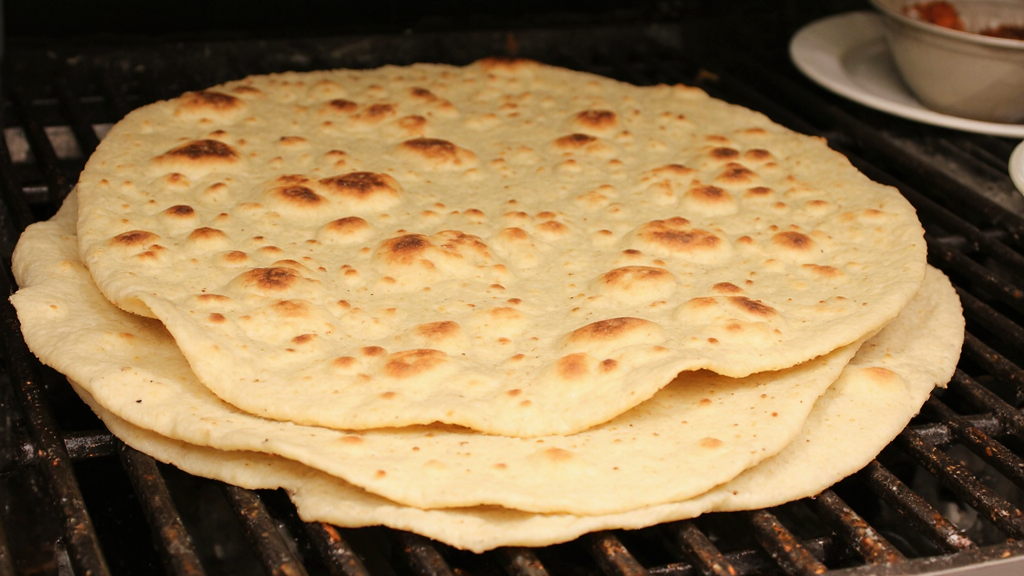
Markouk bread is an unleavened flatbread that stands out for being extraordinarily thin and large. This Lebanese specialty measures between 50 to 65 cm in diameter and achieves a thickness of just 0.5 to 2 mm. You can hold it up to light and see through it almost completely. Handling this paper-like bread requires skill during both preparation and cooking.
Bakers combine half white flour and half wheat flour with water, salt, and either yeast or sourdough to make the dough. These simple yet specific ingredients give the bread a slightly nutty, earthy flavor that complements both savory and sweet accompaniments. Many homemade versions incorporate dry yeast as a rising agent, even though we classify it as unleavened. Warm water activates the fermentation process.
Markouk has a texture that sets it apart from other Middle Eastern breads. You can wrap it around fillings without tearing because it’s flexible enough. Fresh bread develops a soft, slightly chewy quality. Bakers can fold the bread after baking and store it in nylon bags, where it maintains its pliability. Dried bread keeps perfectly for almost fifteen days when layered and protected by cloth.
Regional Names and Variations
Multiple names exist for this flatbread in the Levant, and each reflects local dialects and traditions:
- Markook/Markouk (مرقوق): Derived from the Arabic word “raqiq” meaning delicate, this is the most common name
- Shrak (شراك): Popular in Jordan and Palestine, people make it ahead of Eid celebrations
- Khubz ruqaq (رقاق): Another variation emphasizing its thin nature
- Khubz rqeeq (رقيق): Used in various Arab countries
- Mashrooh (مشروح): Found in certain regions of the Levant
- Saj bread: Named after the cooking equipment itself
Palestinian shrak is different from markook baked in clay ovens. Lebanese versions remain an everyday choice for wraps and meze spreads. Jordanian shrak is a Bedouin staple. Each regional variation maintains the characteristic thinness but may differ slightly in diameter based on available equipment.
Traditional Cooking Method (Saj)
The saj transforms simple dough into this remarkable flatbread. This convex metal griddle resembles an inverted wok and measures 60 to 100 cm in diameter. Wood fires heated the saj in Lebanese villages, but modern versions run on electric or gas heat sources.
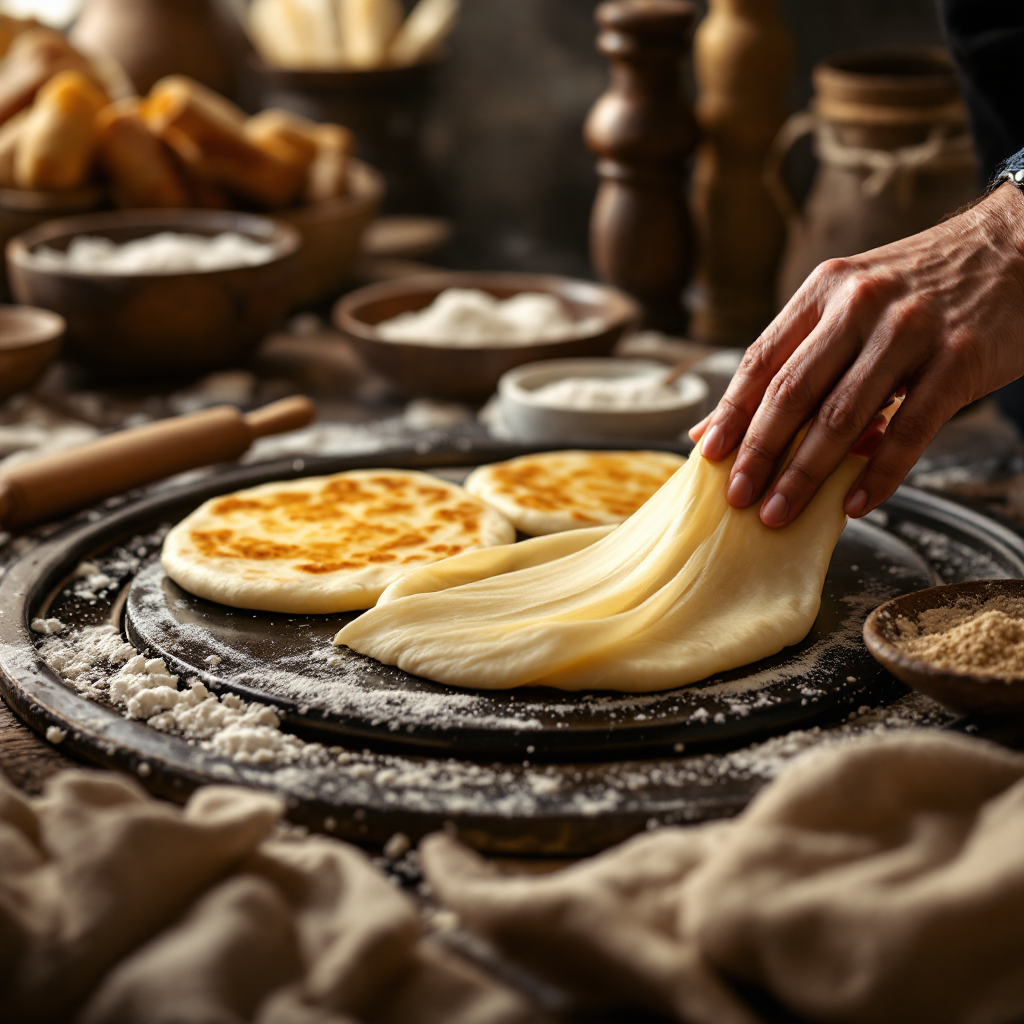
Baking happens fast. Bakers stretch the dough over a round cushion called a “kara” before they overturn it onto the preheated saj. The griddle’s domed shape allows the large, thin dough to cook evenly. Each side takes only 30 to 60 seconds to bake. Small air bubbles form on the surface during this time and edges begin to lift and crisp. The bread browns fast and must be removed right away to avoid tearing.
Women in rural Lebanon continue this tradition. They stretch dough on a wide-surfaced stool called a “tabliyyé” and widen it with circular finger motions. The “hall” technique involves passing dough from arm to arm with rotating movements for even spreading. Modern bakeries have adapted these methods while they maintain the thinness that defines authentic markouk bread.
Origin and History of Markouk Bread
Ancient Bedouin Roots
Flatbreads in the Levant trace back an astounding 14,000 years to the Natufian people, who fire-baked early versions on hot stones in what we now call the Levant region. These hunter-gatherers used primitive sickles to harvest wild cereals and developed mortars to produce finer flour, which led to breads we recognize today. Markouk bread as we know it emerged much later, but these ancient baking traditions set the stage for the region’s flatbread culture.
Bedouin communities played a pivotal role in developing the shrak variation of this bread. Bedouin shrak evolved approximately 200 years ago under Ottoman Empire rule and became a nomadic staple made with just water, wheat, and salt. The bread’s straightforward recipe and rapid cooking method made it ideal for nomads and farmers who formed the backbone of Levantine life. Bedouins diluted their dough mixture and kneaded it to a diameter of about three feet to feed whole families. Bedouin wedding traditions incorporated the liquid dough form, with the groom’s mother dipping her hands in it and smearing the front doorstep before the bride entered.
Spread Across the Levant
Historians found several references showing Levantines have eaten this bread for centuries, though no records pinpoint its exact origin. The earliest documented mention appears in a 10th-century cookbook by Ibn Sayyar al-Warraq, who called it “ruqaq” and described it as large, paper-thin bread. This historical reference confirms the bread’s presence in the region for over a millennium.
German expert Gustaf Dalman studied Palestinian foods during the early 1900s and noted that markook also referred to flatbread made in a tannour oven, sometimes with a bit of leavening. The culinary story traces back to ancient Levantine civilizations, including Phoenicians and Canaanites, who built grain-based diets and flatbread traditions that endure today. The bread became embedded in daily life across these regions, from Syria to Lebanon and Palestine.
Cultural Significance Today
Markouk remains a daily staple in Lebanese households. Its large, paper-thin shape proves ideal for wrapping falafel, grilled meats, or eating with mezze. The bread serves as both a utensil and food source. People fold it with their fingers into a cone shape, which allows them to grasp food without getting dirty and functions as a spoon.
Women make markouk using traditional methods, though men participate by fueling fires or helping with preparation. Women in Lebanese villages still cook their bread on a saj over wood fires and preserve centuries-old techniques. Small neighborhood bakeries now employ men to make and sell the bread for commercial purposes. The practice has survived because of remarkable versatility: the bread can serve as a dish and as eating utensils, can be dehydrated to extend shelf life, and transports with minimal bulk. These practical advantages ensured flatbreads remained popular throughout the Near East, Central Asia, Mediterranean areas, and the Arabian Peninsula.
How Markook Bread Is Made
Everything in Markouk Bread
Markouk bread requires few components. The standard recipe calls for 3 1/2 cups all-purpose flour, 2 teaspoons active dry yeast, 1 tablespoon sugar, 1/2 teaspoon salt, and 1 1/4 cups warm water. Oil for coating the dough during rising gives the bread its distinctive flavor. Some bakers prefer combining regular all-purpose flour with whole-wheat flour for added depth. Others stick to white flour.
Water temperature matters for activating yeast. The water should fall between 105°F and 115°F. Sugar feeds the yeast and helps it activate. This creates the rise that gives markouk its subtle pocket between layers.
Equipment Needed
A traditional saj remains the ideal cooking surface. Home cooks can achieve excellent results with alternatives, though. An inverted wok with a smooth rounded bottom works well, and so does a large non-stick griddle pan or flat crepe pan. The secret lies in having a broad, hot surface that allows the thin dough to cook evenly.
Besides the cooking surface, you’ll need a round pillow called a kara to transfer stretched dough. Many households keep one pillow dedicated to food preparation. A thin rolling pin helps flatten dough balls, though hand-stretching produces more authentic results. Cornmeal or flour prevents sticking during the shaping process.
Step-by-Step Preparation Process
Start by dissolving yeast and sugar in 1/4 cup warm water. Let the mixture stand for ten minutes until bubbly. Mix flour and salt in a separate bowl, then create a well in the center. Pour in the yeast mixture and remaining water. Knead by hand or with a dough hook until smooth and non-sticky.
Place the kneaded dough in an oil-lined bowl and cover with a damp cloth. Leave in a warm place for about two hours. Room temperature during rising should stay between 75°F and 85°F. After the dough doubles in size, knead it lightly for a few minutes. Divide it into small pieces and roll them into smooth balls.
Flatten each ball either by hand or with a floured rolling pin. Stretch as thin as possible. The goal is paper-thin dough you can almost see through.
Cooking Techniques
Markouk cooks fast. The bread bakes in just 15 to 20 seconds on a traditional saj, similar to how it’s been prepared for generations. An inverted wok extends cooking time to 1 to 2 minutes. Cook on one side only until the underside browns and edges crisp slightly.
Stack finished breads between clean kitchen towels right away to keep them soft. A light mist of water on each baked bread helps maintain pliability.
Common Mistakes to Avoid
Dough that remains uncovered at all stages allows a skin to form. This prevents proper rising. Salt added directly on top of yeast kills the yeast, so mix them on opposite sides of the bowl. Kneading too much at any stage affects the bread’s final texture. Gluten development requires balance.
Many bakers add too much liquid at first. Add water bit by bit until dough forms a ball that cleans the bowl’s bottom. Poor proofing produces flat bread, so test by pressing a finger into the dough. The indentation should disappear slowly. This means proofing is complete.
Markouk vs Pita vs Lavash: Key Differences
Three Middle Eastern flatbreads often get confused, but markouk stands apart as the thinnest option. Pita and lavash share the flatbread category, yet each serves different culinary purposes based on thickness, texture and preparation methods.
Comparison Table
| Feature | Markouk | Pita | Lavash |
| Thickness | 0.5-2mm (thinnest) | 3-5mm | 2-3mm |
| Size | 50-65cm diameter | 15-20cm diameter | 60-70cm length, 30-40cm width |
| Leavening | Unleavened | Leavened (yeast) | Leavened or unleavened |
| Minimal pocket | Large central pocket | No pocket | |
| Cooking Surface | Saj (convex griddle) | Oven floor | Tandoor walls |
| Cooking Time | 15-60 seconds | 2-3 minutes | 15-40 seconds |
| Origin | Lebanon/Levant | Middle East | Armenia/Turkey/Iran |
Thickness and Texture Differences
Markouk earns its reputation as the thinnest flatbread. You can almost see through it because it’s so delicate. Pita bakes thicker with a soft, chewy texture and characteristic pocket that steam forms during cooking. Lavash falls between the two and is classified as a single-layer flatbread with a thickness of 2-3mm.
Fresh markouk stays flexible and pliable, perfect to wrap fillings without overpowering them. Pita maintains its softness longer and provides structure to stuff. Lavash becomes cracker-like when stale, whereas pita remains chewy. The paper-thin quality of markouk makes it superior when you need maximum flexibility.
Cooking Methods
The cooking method produces distinctive characteristics for each bread. Markouk cooks on a saj, where dough gets slapped onto the hot convex surface and creates multiple small air pockets throughout. Pita bakes on the oven floor at high temperatures. The dough puffs up and forms its signature pocket. Lavash bakes against tandoor walls through thermal radiation and convection. It cooks in just 15 to 40 seconds.
Best Uses for Each
Markouk excels as a wrap for kebabs and shawarma. Its thinness allows fillings to shine through without adding bulk. You can crisp it in an oven or air fryer to make chips, use it as pizza crust, or cut it into pieces for finger foods like taquitos.
Pita works best when you need the pocket structure to stuff with falafel and hummus. Cut into triangles and baked, it transforms into sturdy chips to dip.
Lavash serves well for wraps and pizzas. Its thin, flexible nature makes it ideal for pinwheels and breakfast burritos while rolling around fillings. It crisps beautifully when brushed with olive oil and za’atar for chips.
How to Use, Store, and Buy Markouk Bread
Best Ways to Enjoy Markouk
Markouk shines as part of a traditional breakfast spread with labneh, olives, tomatoes, preserves, butter and cheese. You can fold it with za’atar, extra virgin olive oil, dandelion leaves and salt, then roll and fold it in two to make a simple meal. The bread works well to mop up sauces from soups and stews.
Wraps and sandwiches showcase markouk’s flexibility. Fill it with falafel, chicken shawarma or kofta kebab. You can create manakeesh by topping it with cheese or za’atar mixed with olive oil. Cover half the bread with fillings like cheese and spinach to make borek, fold it over, then cook. The bread also serves as flatbread pizza crust when topped with tomato puree, marinara and cheese, then broiled until warm. Sweet wraps filled with homemade Nutella or banana with nut butter provide dessert options.
Storage Tips and Shelf Life
You can store cooled markouk in an airtight container or bag in the cupboard about a week, or refrigerate it longer. Cover it well to prevent drying out. An airtight bag or container preserves the bread in the freezer up to 6 months. Fold the bread with parchment paper between layers to prevent sticking before you freeze it.
Thaw frozen bread in the fridge or at room temperature before using. Hold the bread over gas stove burners 5-10 seconds and flip a couple times to reheat it quickly. Microwave it a maximum of 10-15 seconds only. Room temperature defrosting takes about 15 minutes.
Where to Buy Markouk Bread
Local Middle Eastern bakeries stock fresh markouk bread. Online retailers carry packaged versions. Specialty stores offer brands such as Markook Thinnest Flatbread and packages containing 4 or 10 packs.
Markouk Recipes to Try
Try toasted markouk sandwiches with scrambled eggs, cheesy chicken ham panini and mozzarella. Chicken shawarma bites wrapped in markouk make excellent appetizers. Veggie wraps provide lighter options.
Conclusion
Markouk bread stands out as the thinnest flatbread you’ll find. Its versatility makes it worth learning about. You can wrap shawarma or create crispy chips with this Lebanese specialty that adapts to countless dishes.
Ready to experience authentic markouk? You can find quality saj bread online at specialty retailers. Visit your local Middle Eastern bakery for the freshest options. Of course, making it at home offers a rewarding experience, and you’ll find plenty of markook bread recipe variations to suit your priorities.
This ancient flatbread deserves a place in your kitchen. Try it once and you’ll understand why it’s remained a Levantine staple for centuries.
FAQs
Q1. What ingredients are used to make markouk bread? Markouk bread is made from simple ingredients including flour (often a combination of white and wheat flour), water, salt, and sometimes yeast or sourdough. Traditional recipes use about 3 1/2 cups of all-purpose flour, 2 teaspoons of active dry yeast, 1 tablespoon of sugar, 1/2 teaspoon of salt, and warm water. The dough is unleavened or lightly leavened, creating the bread’s characteristic thin, delicate texture.
Q2. How should I serve and eat markouk bread? Markouk bread is incredibly versatile and can be enjoyed in many ways. It’s perfect for wrapping around fillings like shawarma, falafel, or grilled meats. You can also serve it as part of a traditional breakfast spread with labneh, olives, and cheese, use it to scoop up dips and sauces, or crisp it in the oven to make chips. The bread can even be topped with cheese or za’atar to make manakeesh.
Q3. Is markouk bread a healthy option? Markouk bread can be a healthy choice, with one portion containing approximately 135 calories. The macronutrient breakdown is about 82% carbohydrates, minimal fat, and 18% protein. It’s also a good source of dietary fiber, providing about 14% of your daily value. The bread’s simple ingredients and thin nature mean you’re consuming less bread per serving compared to thicker flatbreads.
Q4. What makes markouk different from pita bread? Markouk is significantly thinner than pita bread, measuring just 0.5-2mm compared to pita’s 3-5mm thickness. While pita is leavened and forms a large central pocket during baking, markouk is unleavened with minimal pocketing. Markouk is also much larger in diameter (50-65cm) and cooks much faster (15-60 seconds) on a saj griddle, whereas pita bakes in an oven for 2-3 minutes.
Q5. How long does markouk bread stay fresh and how should I store it? Fresh markouk bread can be stored in an airtight container at room temperature for about a week, or refrigerated for longer periods. For extended storage, freeze it in an airtight bag for up to 6 months, placing parchment paper between layers to prevent sticking. When ready to use, thaw at room temperature for about 15 minutes or reheat by holding it over a gas burner for 5-10 seconds.
